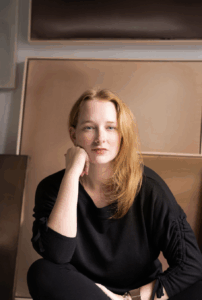
 Ali Enache is a Los Angeles-based abstract painter whose minimalist, textural works are characterized by warmth, subtle movement and tonal depth. With a reverence for raw materials, Enache coaxes diluted acrylics into delicate stains on unprimed canvas, embracing imperfect layering as a language of depth and nuance. Enache works at the intersection of intuition and intention, where fluid gestures meet thoughtful restraint. Working in layered, translucent washes, she allows pigment to dissolve into the fibers of the textile, forming atmospheric compositions that evoke the shifting landscapes of memory and emotion. At once grounded and ethereal, her work explores the space between introspection and expression. Her nuanced palettes, subtle marks and translucent fields evoke shifting emotional states — offering a contemplative space where memory, vulnerability, and reflection converge. Her paintings speak in a visual language of texture, tone, and translucence — where each painting is a distillation of feeling, transforming the ephemeral into something enduring and tangible.
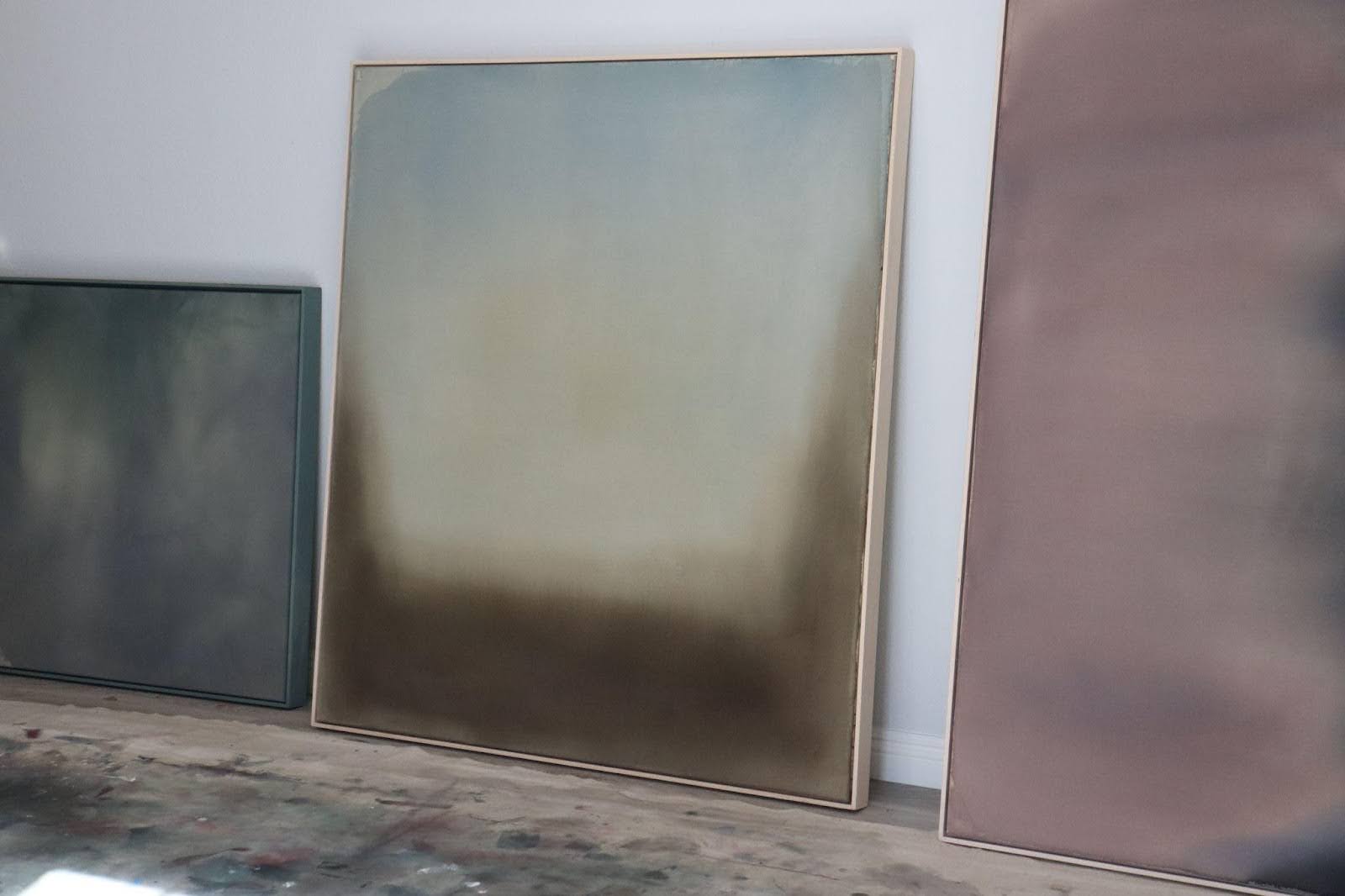
Silhouetting II
aspire design and home: In what ways do you feel your work contributes to the representation of women in the art and design world?
Ali Enache: Like Agnes Martin and Anne Truitt, I hope to contribute to the evolution of minimalism through a distinctly female lens — one that softens the rigid edges of the movement and invites nuance, emotion and imperfection into the conversation. Traditional minimalism often emphasizes strict geometry, industrial materials and a kind of emotional detachment. My work seeks to challenge that by introducing what I think of as subtle-ism — a practice where simplicity does not equate to sterility, but rather opens the door to layered complexity.
I’m interested in how minimal forms can hold space for the full range of human emotion — from contemplation to longing to grief. I want to create work that feels lived-in and soulful, where texture, quiet gestures and imperfection are not only welcome, but essential. In this way, I hope to expand the language of minimalism and carve out more room for female narratives, emotionality, and intuition within contemporary art.
adh: What advice would you give to other women looking to enter the field of high-end artisanal crafts?
AE: Don’t wait for permission to take yourself seriously and spend all your time discovering the styles you love to make and then make a lot of work. Don’t think about selling it or where it will go, but simply what you enjoy making and what lights you up.
Also, invest in the photography of your own work. Invest as much care and time and value into how you present your work, as the work itself. Today, online matters, and it’s important to make sure your work comes alive on the screen.
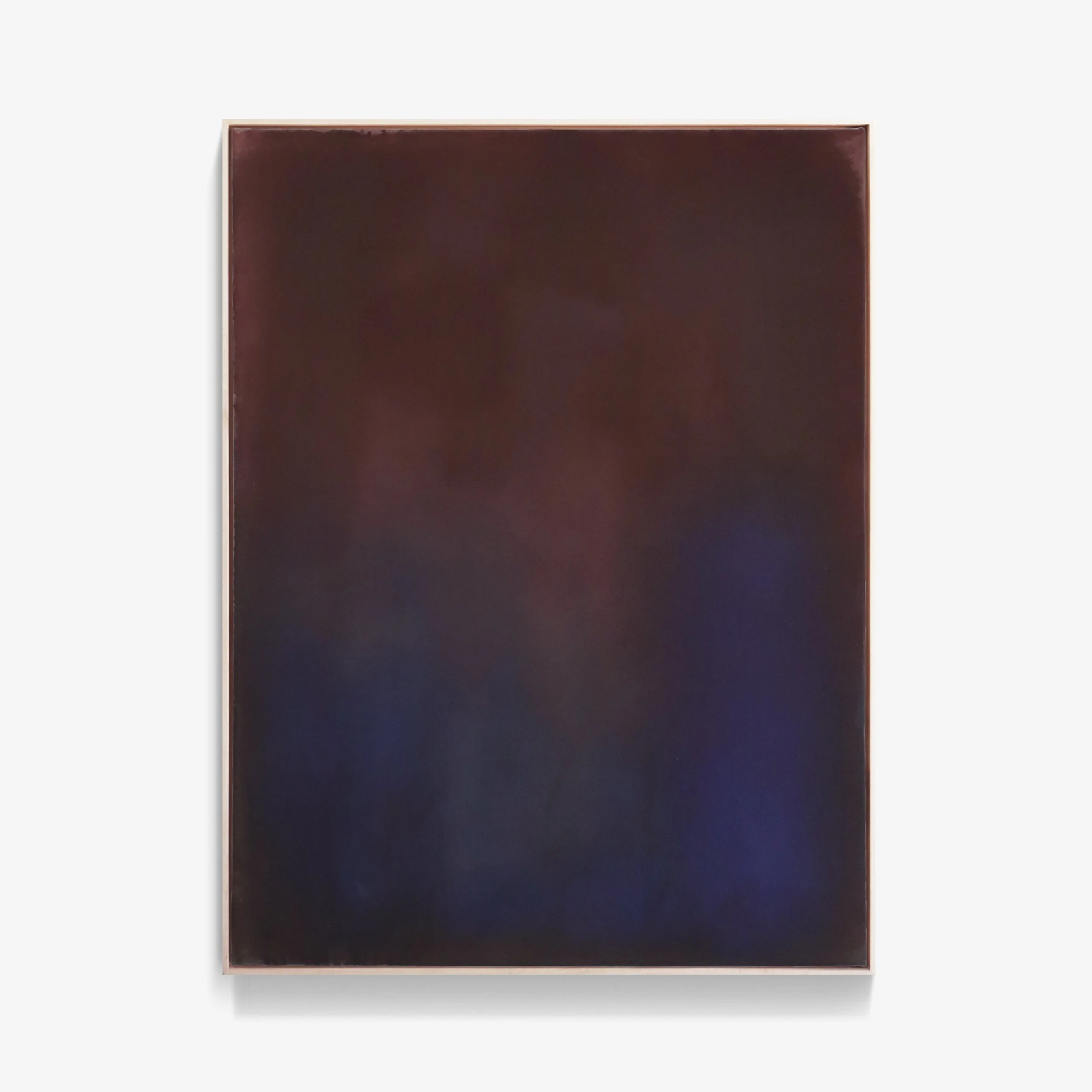
Rise Up II
adh: How has your personal journey as a woman shaped the stories you tell through your creations?
AE: Motherhood, memory and the experience of holding conflicting truths — grief and joy, fragility and resilience — are central to my creative language. These emotional dualities have shaped not only the content of my work but also the way I approach materials: with presence, patience and openness. As a woman, I’ve learned to listen closely to subtle shifts — whether in light, emotion or texture — and to trust the quiet power of slow transformation. The textile becomes more than a surface; it’s a space where I can metabolize complexity and transmute it into something both honest and expansive.
adh: Can you tell us a bit about your background and how you got started in your craft?
AE: I was an artist my entire childhood, starting art classes and camps early on in elementary school. My mom was able to see my passion and skill and wanted me to explore it to the fullest. All through high school, I was lucky enough to study and work under two working artists who were teaching at the college level in my area. It was then that I saw the spiritual impact and authenticity of making art, at the time mostly pencil or charcoal drawings and paintings of still life. After jumping into new subjects in college, my early professional focus came back to artistic pursuits, but this time digitally through graphic design and typography. For a long time, I was fulfilled, but once I picked up the paintbrush again after becoming a parent, I realized I had overlooked what I was meant to be doing all this time.
“The sharp delight of watching what has been inside one’s own most intimate self materialize into visibility.” — Anne Truitt
adh: How do you manage work-life balance, especially in an industry that demands both creativity and business acumen?
AE: I’ve learned that protecting my time and energy is not just a practical need — it’s an act of preservation for my creative life. I’ve had to be intentional about creating boundaries — especially as a mother. I’ve come to deeply value the importance of pockets of stillness — spaces where I’m not producing, performing or responding, but simply existing and reconnecting to myself.
These moments of pause are where the real ideas come. They’re where intuition lives. And when you’re balancing the demands of both an artistic practice and the realities of business, those moments are non-negotiable. I’ve had to become comfortable saying no and letting go of urgency, which is not easy for someone who is a perfectionist outside of my art practice.
Motherhood, too, has been a powerful teacher in this. It constantly reminds me that presence is more valuable than productivity. That rhythm matters more than routine. And that it’s okay for my seasons of work to ebb and flow depending on what life is asking of me. I don’t believe in perfect balance — but I do believe in conscious prioritization, and in honoring the dual roles I hold as both an artist and a mother with as much grace as I can.
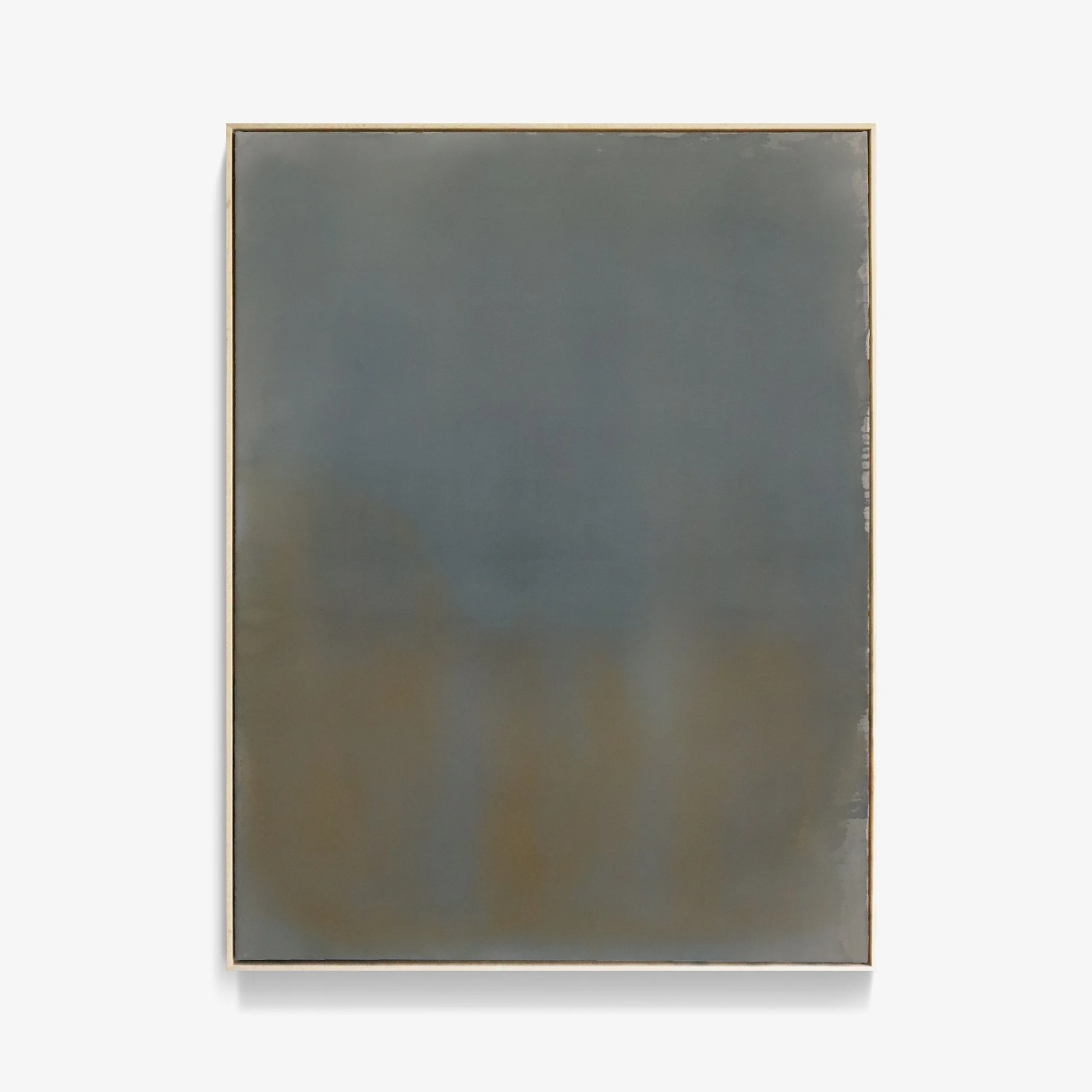
A Real Hero
adh: How do you think your work has evolved over the years, and what factors have driven that evolution?
AE: In the beginning, my work poured out with a kind of raw urgency — instinctive and unfiltered, like a release. As life evolved and I began navigating the dual rhythms of motherhood and painting, my practice naturally shifted. I’ve learned to work within the spaces in between — the quiet hours, the pauses — and that rhythm has deeply informed the tone of my work. Over time, my paintings have grown quieter, more open. I’ve let go of control and leaned into a kind of intentional looseness: movement without force, softness without loss of clarity. I’ve also allowed myself to dive into restraint — to trust that holding back can be just as expressive as pouring out. There’s an emotional imprint in the work now — a reverence for imperfection, for the ephemeral, for forms that feel like they’re just about to slip away.
adh: How do you approach the business side of your craft, such as marketing and sales?
AE: I treat the business side as an extension of the work itself — intentional, relational and rooted in a long-term vision rather than short-term gain. Just as I approach painting with care and presence, I believe the way my work is presented — through photography, writing and dialogue — deserves the same level of thoughtfulness.
Photography is not just documentation; it’s an emotional bridge between the viewer and the piece. It captures the atmosphere, the texture, the quiet energy of a painting in a way that invites reflection and connection. Writing, too, is a critical layer. It allows me to give language to the subtleties of my process and offer context that deepens the viewer’s experience.
I believe that how the work lives beyond the studio matters — how it enters a space, how it’s spoken about, how it’s shared. My approach to marketing and sales is grounded in authenticity and alignment. I want my work to find homes where it resonates deeply, not just where it sells quickly. That means building relationships, not just transactions, and choosing representation or collaborations that honor the spirit of the work. For me, business isn’t a separate hat I wear — it’s interwoven deeply with my practice.
adh: What role does experimentation play in your creative process?
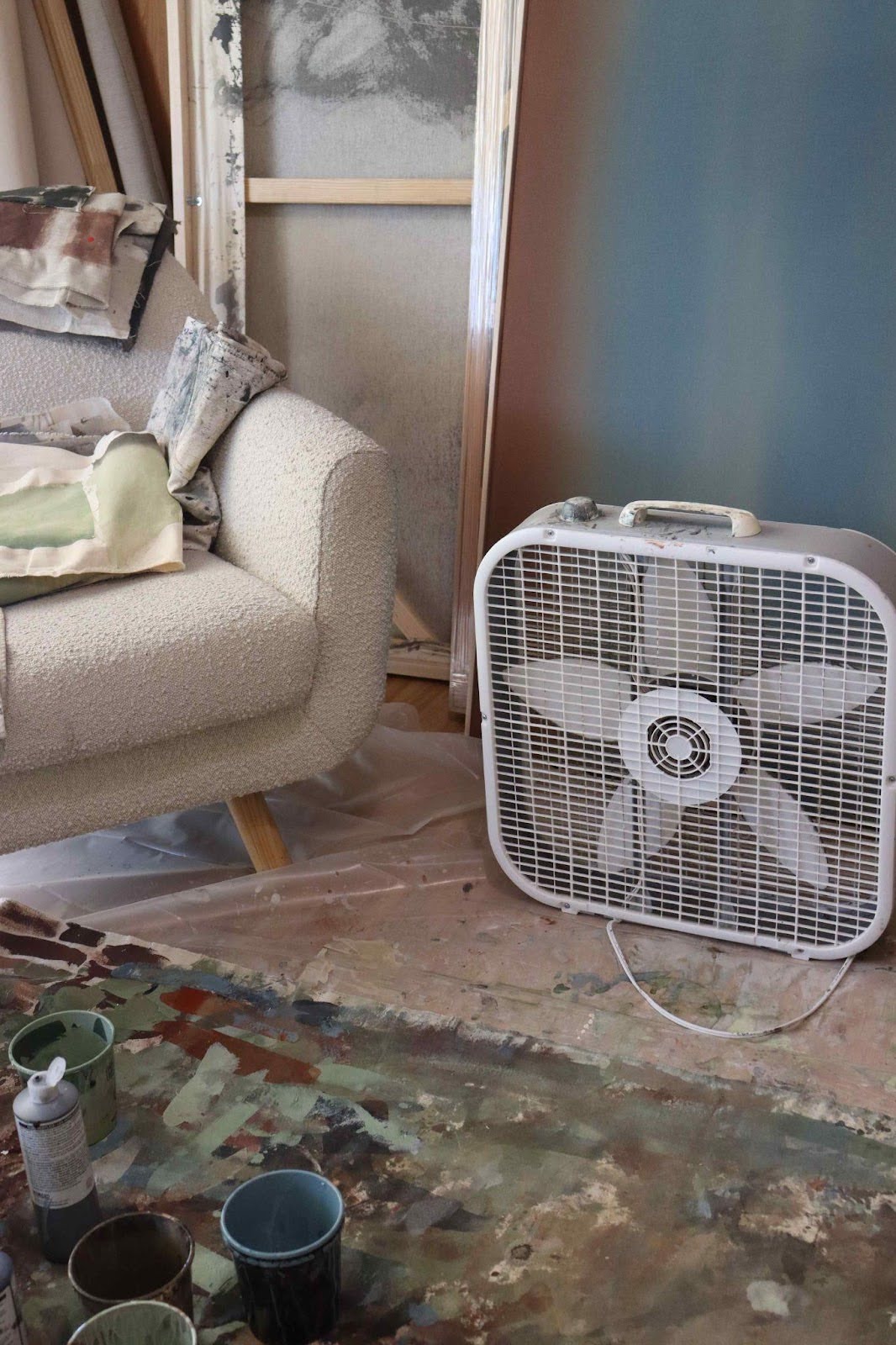
AE: It’s essential — I constantly push materials just to the edge, out of curiosity. That’s where the most interesting things happen. I also do not do a lot of studies or preparation work, as I thoroughly enjoy the process of seeing how a particular technique or color combination pans out as I go, giving me the opportunity to react and respond. This has allowed me to learn numerous ways of working I love that would not unfold in a small study. Anytime I dislike the direction a piece is going, I try something new before throwing it away. Sometimes my response to a mistake or unsatisfying layer will turn the whole piece around.
adh: What do you hope your legacy will be in the world of high-end artisanal crafts?
AE: I hope my work is remembered for offering a quiet but powerful shift in how we perceive minimalist art — not as detached or cold, but as deeply emotional, alive, and human. Through what I call subtle‑ism, I’ve sought to demonstrate that restraint and subtle layering can be as expressive as bold gestures and color, and that simplicity can hold complexity. I want my legacy to affirm that minimalist forms can be vessels for vulnerability, memory, and presence.
At the same time, I hope that people remember me not just for what I created, but for how I lived. That I made space for a meaningful artistic practice while also raising a family — that I honored both parts of myself, even when the balance was messy or imperfect. For me, the quiet resilience it takes to keep making, to keep showing up for both art and motherhood, is the most radical and lasting thing I can offer. If that gives even one other woman permission to pursue her creative life on her own terms, then that, to me, is a legacy worth leaving.
Like what you see? Get it first with a subscription to aspire design and home magazine.