
Jennifer Farrell has been busy. With her multi-category collection with Global Views launching at October’s High Point Market and its upcoming unveiling at markets around the country, the designer’s agenda has been creatively packed.
“My thoughts and my excitement right now are very much shared between the activity at the Interconnected Changeable Environments House and all that’s happening in the States with the new line,” the designer shared. “In the next six months, the energy here in France will really ramp up because we’re getting into the full swing of serious construction. For the moment, though, I’m so excited to finally be revealing my Global Views line to the design community. It has been a labor of love, and seeing it come to fruition and sharing the inspiration is so rewarding.”
Jennifer Quail caught up with the designer as she prepared for her trip to High Point Market to discuss Extension House, the most versatile of the three structures that make up the Interconnected Changeable Environments House.
Jennifer Quail: Extension House is the most flexible of the three houses on the site. Tell us about it and how it will function and shift.
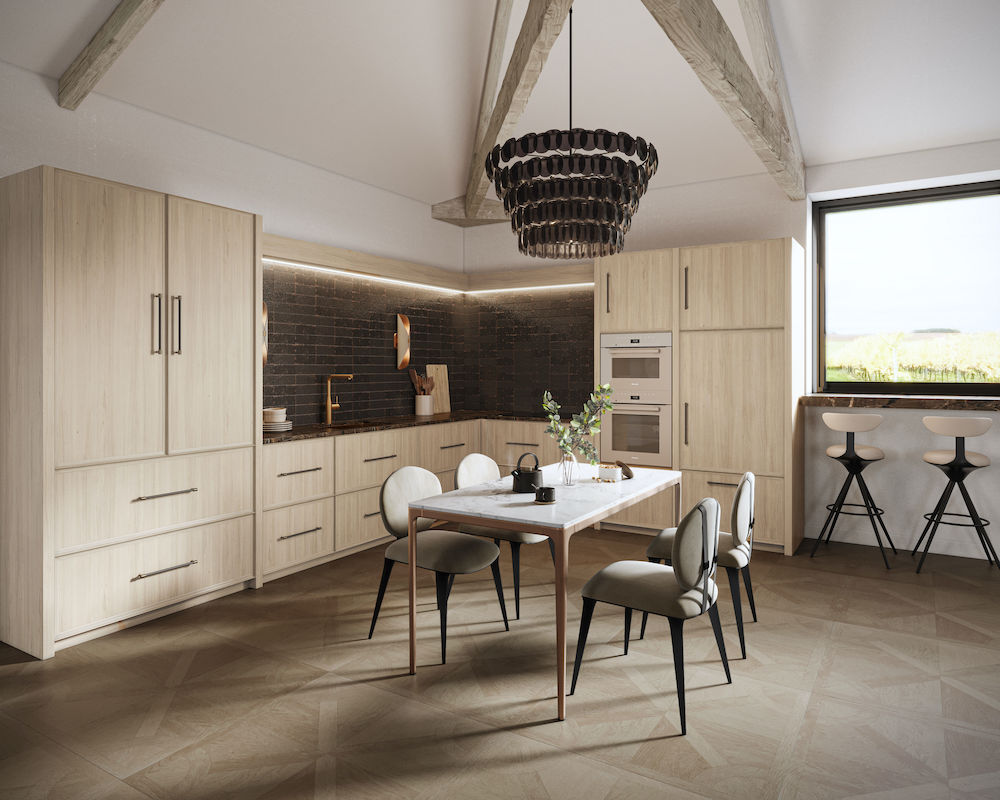
Jennifer Farrell: Extension House is its own unique space in that it is exactly what the name implies: It is an extension of the main house, and a separate home unto itself. Overall, it’s about 1,700 square feet and can completely function as a standalone home. In total, it will be a three-bedroom, three-bathroom home that overlooks the pool and the courtyard and has its own driveway and spectacular views of the vineyard that surrounds the property.
We’re essentially keeping the footprint and the layout of the home itself — the construction aspect is more of a decorative change. The way we’re modifying it is to have it be adaptable within itself. So, although we have these three interconnected changeable environments, Extension House itself is changeable over time. It can be treated as one standalone home, it can be two units, or it can be three units, or it can be a literal extension of Center House, and together they become one home. More than any of the other environments on the property, it has the built-in ability to be flexible.
JQ: For the official reveal, the house story is being told at year 40. How will Extension House be functioning at that time?
JF: For the year 40 moment we’re representing at the unveiling, Extension House will function as two separate units, where all you have to do is open the sliding walls and it can become all one unit. One of the units has a full kitchen and great room, while the second unit has a micro kitchen with one of the bedrooms having been transformed into a sitting room/den.
We have these open-air spaces, and the idea with them is that, in time, you can enclose them in glass, so they become rooms in themselves. For the reveal, we will have enclosed the breezeway that connects Center House to Extension House in glass to become our entertainer’s kitchen. The breezeway then continues to the physical connection between Extension House and Center House, and that’s where we’ll have a sliding wall. When the wall is closed, it will look like you’re at the end of Center House, but when the wall slides open, you’re able to pass into Extension House. When that sliding wall is in place, you don’t even know there’s another house there. That’s one of the fun things about the transformation here: You have these moments of opportunity for surprise.
JQ: Let’s talk about materials. As we’ve seen with Indy House and Center House, there are some materials that carry across the different houses and some that are individual to each. What materials will we see in Extension House?
JF: Each of the three homes has its own spirit, yet I want to keep them united in overall energy because they’re all on the same property. That being said, I want Extension House to have its own vibrancy, and I would say that, of the three homes, it has the most playful of the designs and moments that make me smile, and I always like to have a bit of smile in design.
Some of the materials we’re going to see at Extension House are lighting elements that have big, bold, playful impact. Lighting is something I’ve been so passionate about for so long — as an ambassador for Lamps Plus and now at Global Views, where I’m creating my own lighting pieces. Kalco Lighting is providing all our lighting in Extension House. They’re also our custom light works installation partner in Center House, which is the main house. My friend Christopher Grubb is one of the brand partner designers at Kalco, and he and I are working now on creating this big, beautiful sculpture made of light that will dance across the sky in the two-story entry. It is really a journey.
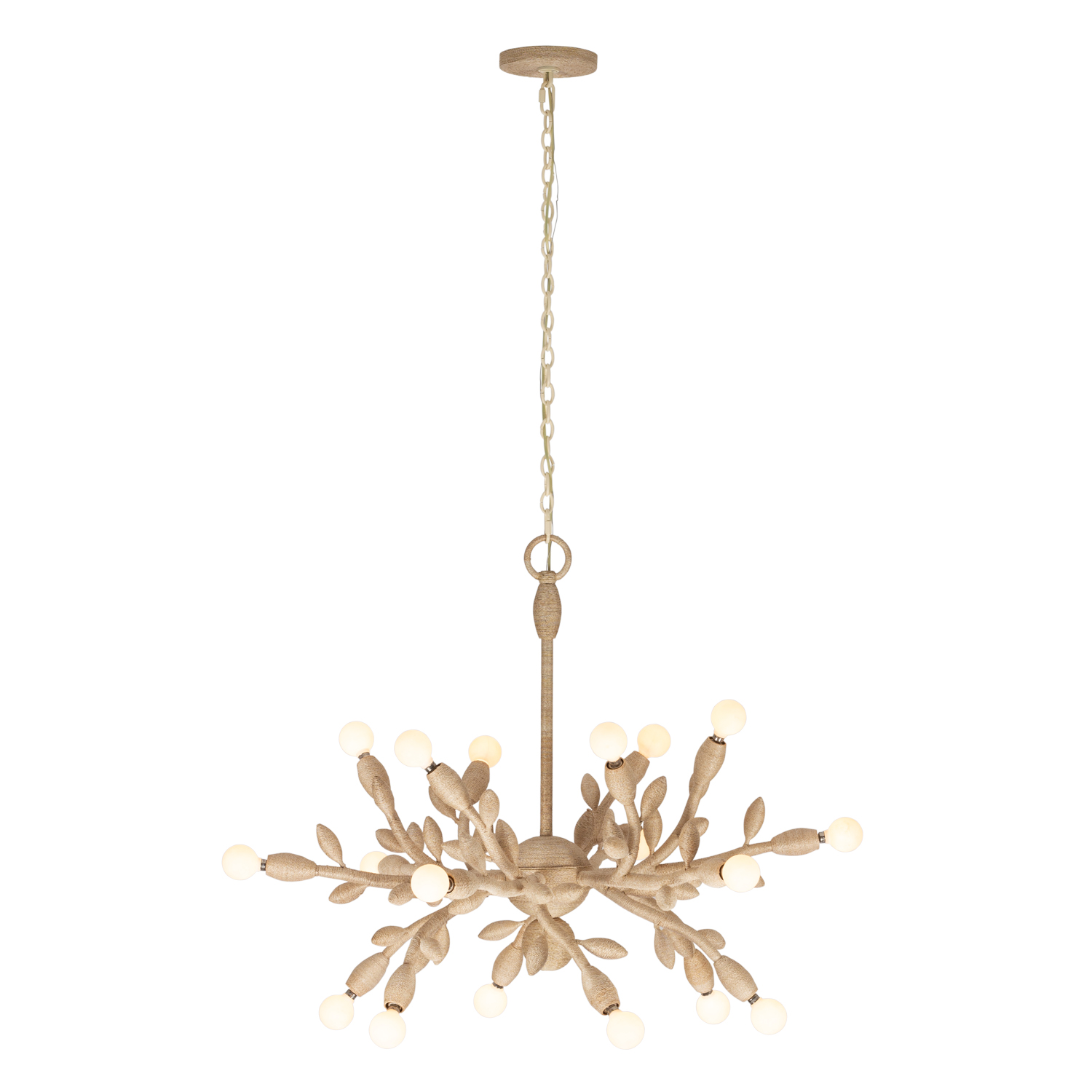
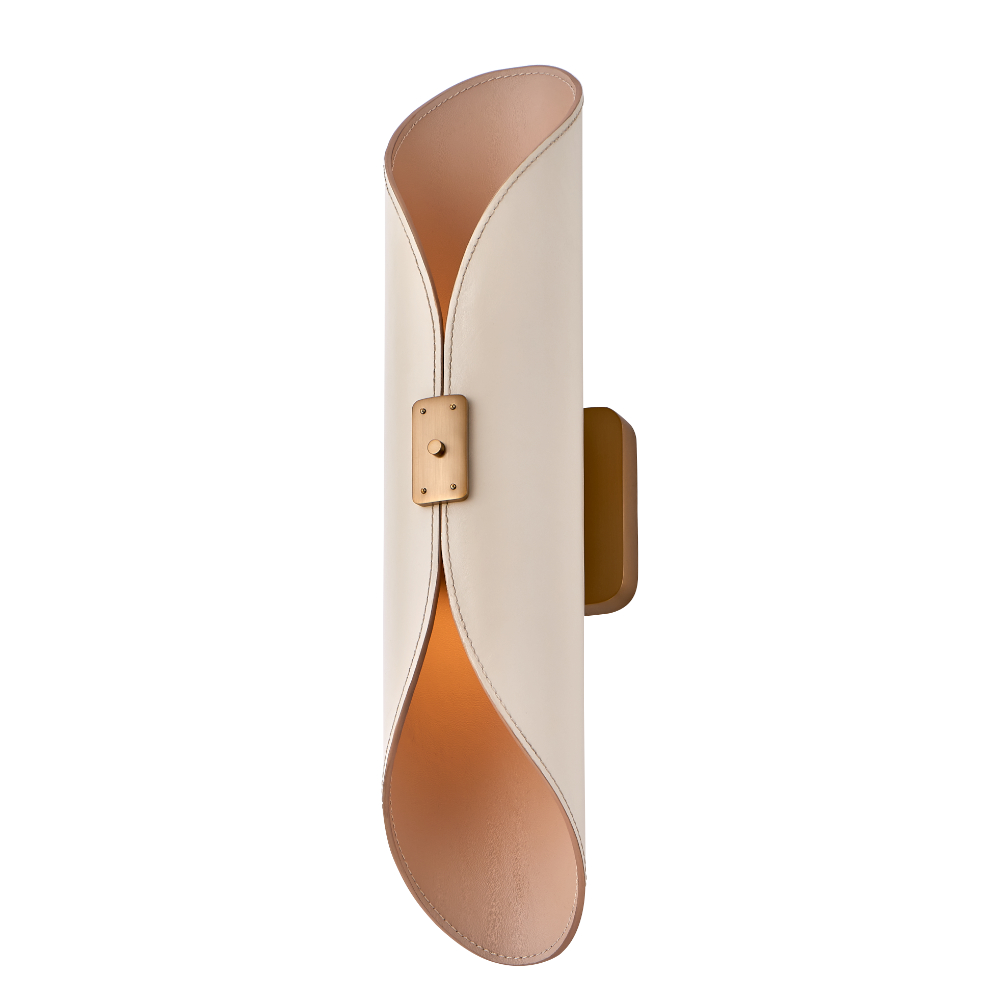
I’ve selected some sculptural pieces that have a sense of drama and whimsy, with nature-inspired elements like branches. There are some beautiful sconces called Cape that were designed by my friend Vanessa Deleon, and they are leather over-wrap sconces that almost fold like a burrito. They’re lovely and elegant, and yet there’s this undercurrent of joy and whimsy. Those moments are ones that I’m looking for — that bit of play.
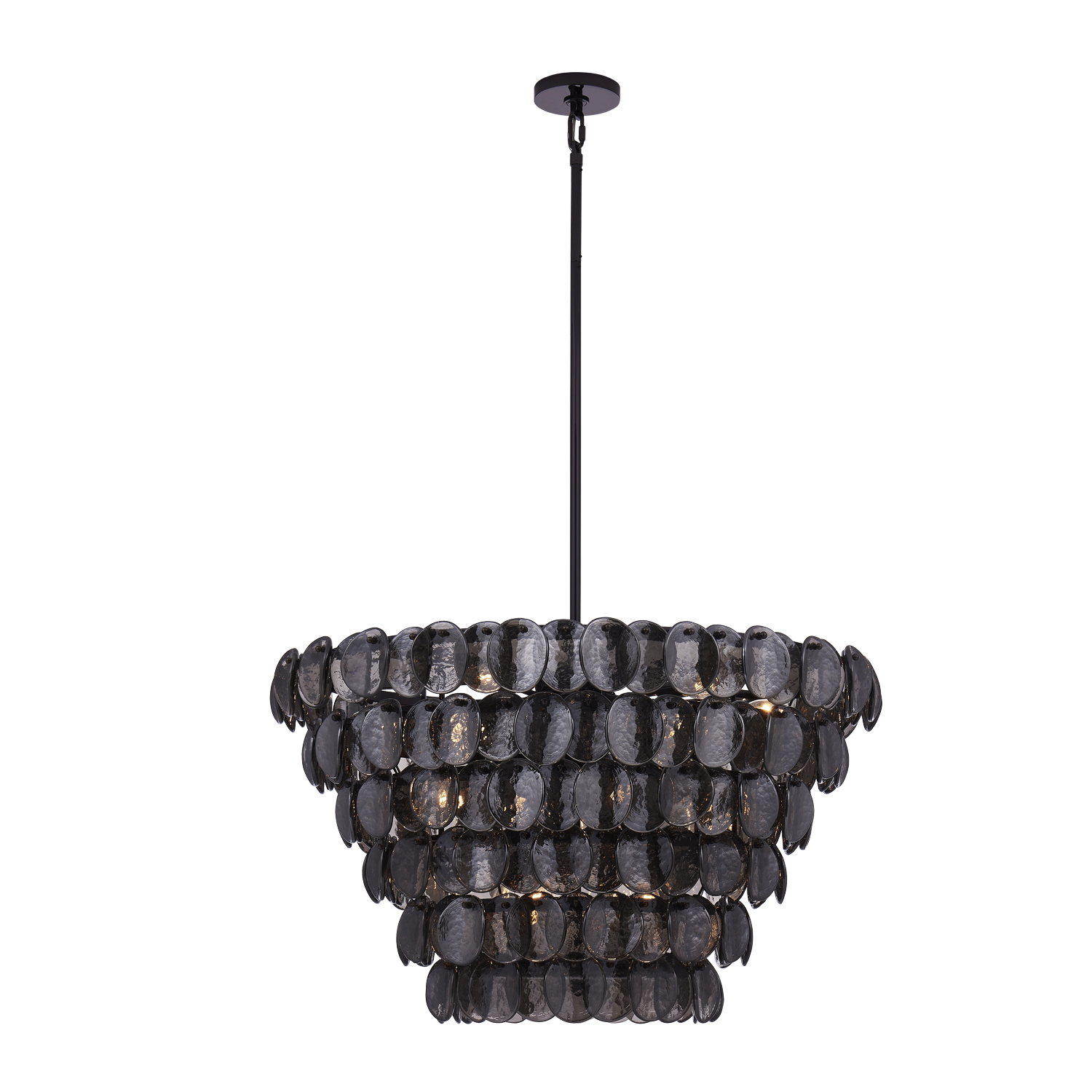
Cosentino is our engineered stone and compact porcelain surfaces partner, and I’ve selected their stunning Laurent, which is a Dekton product, for the countertop. It’s a black simulated stone look with these gorgeous copper veins running through it. On the walls behind that in the kitchen, I have my Metamor tile from Emser, which is this beautiful black tile with copper flecking and patina. The two of them together are perfect, just exquisite. Then the Kalco Uroko Pendant that hangs over the dining table in the great room in Extension House has these gorgeous brownish-black glass wafers with metallic trim that appear to float in the sky. Those three pieces together just tell such a beautiful story. To get to bring all of those together in one story, in one living world… for me, it’s very exciting.
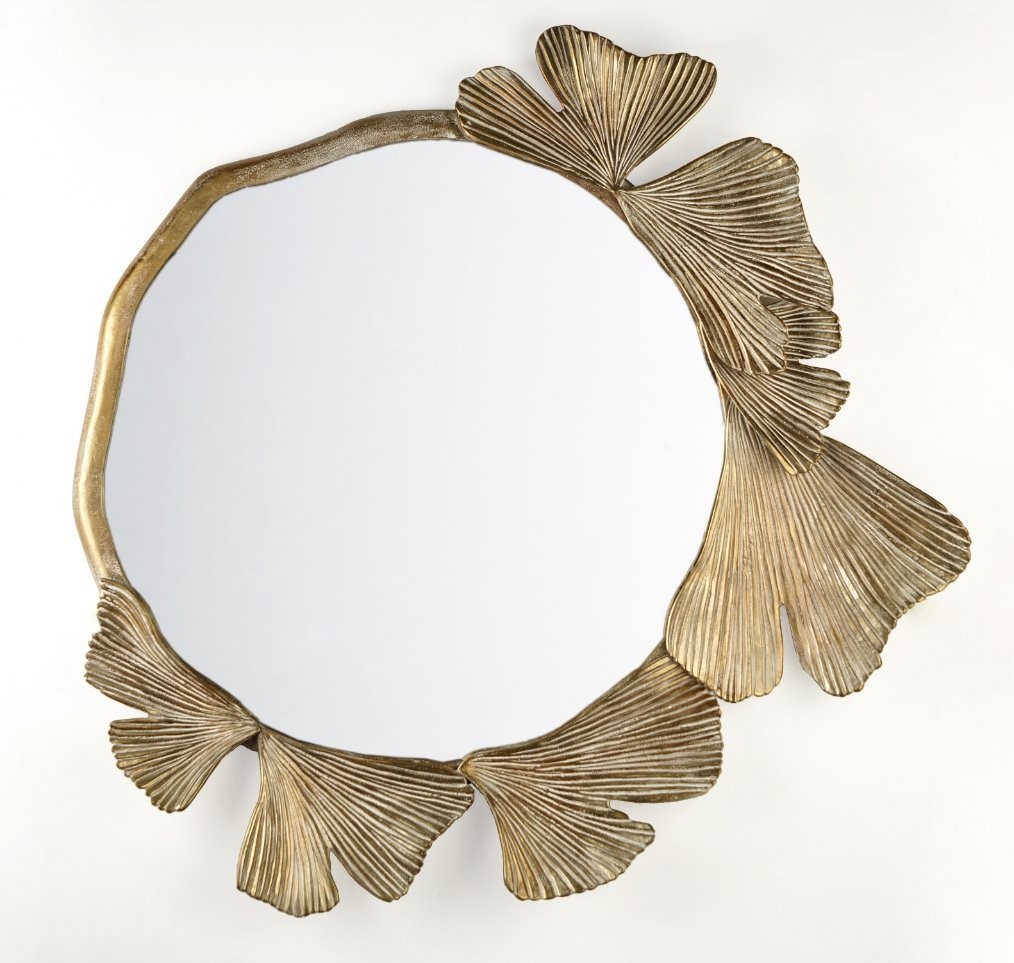
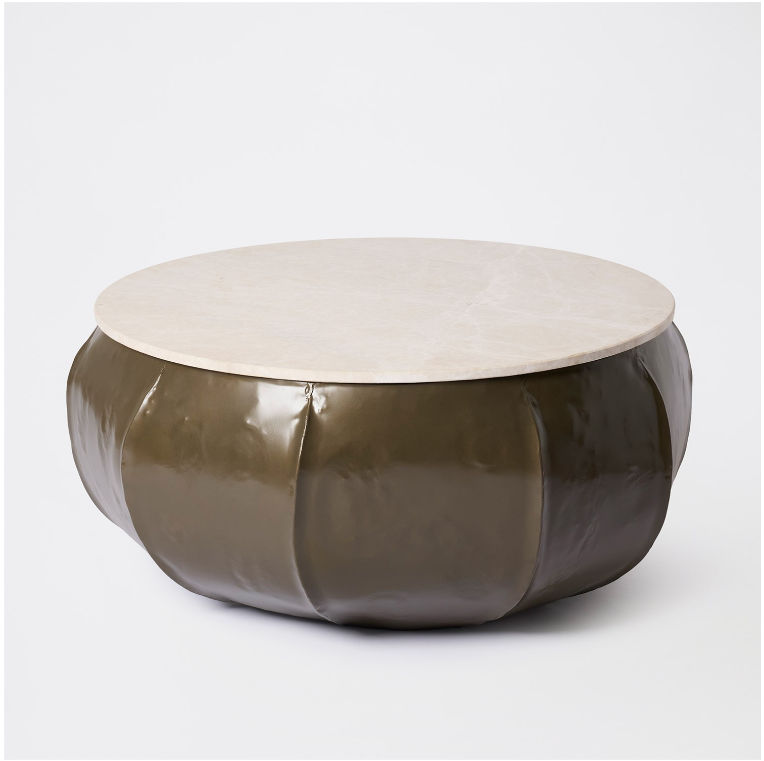
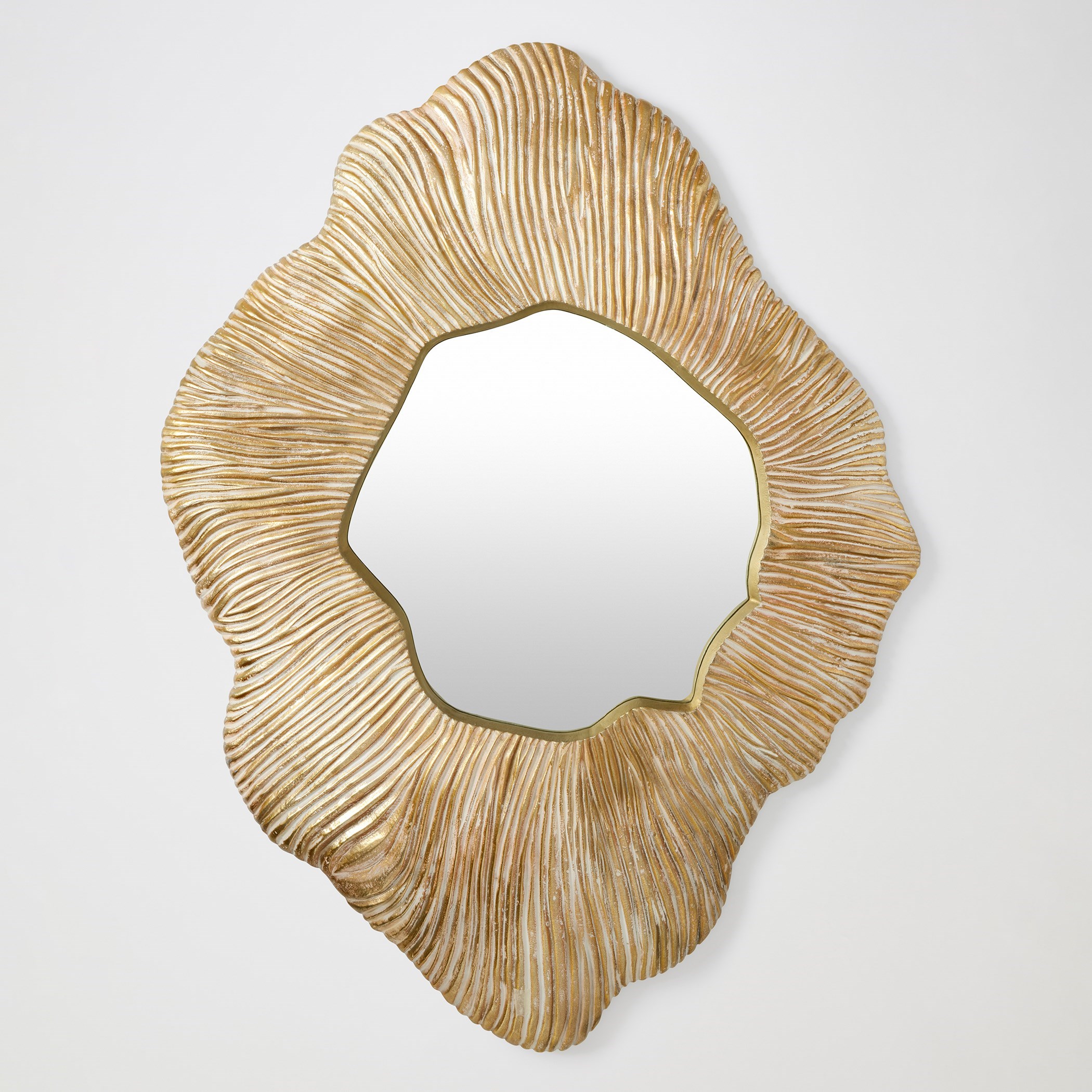
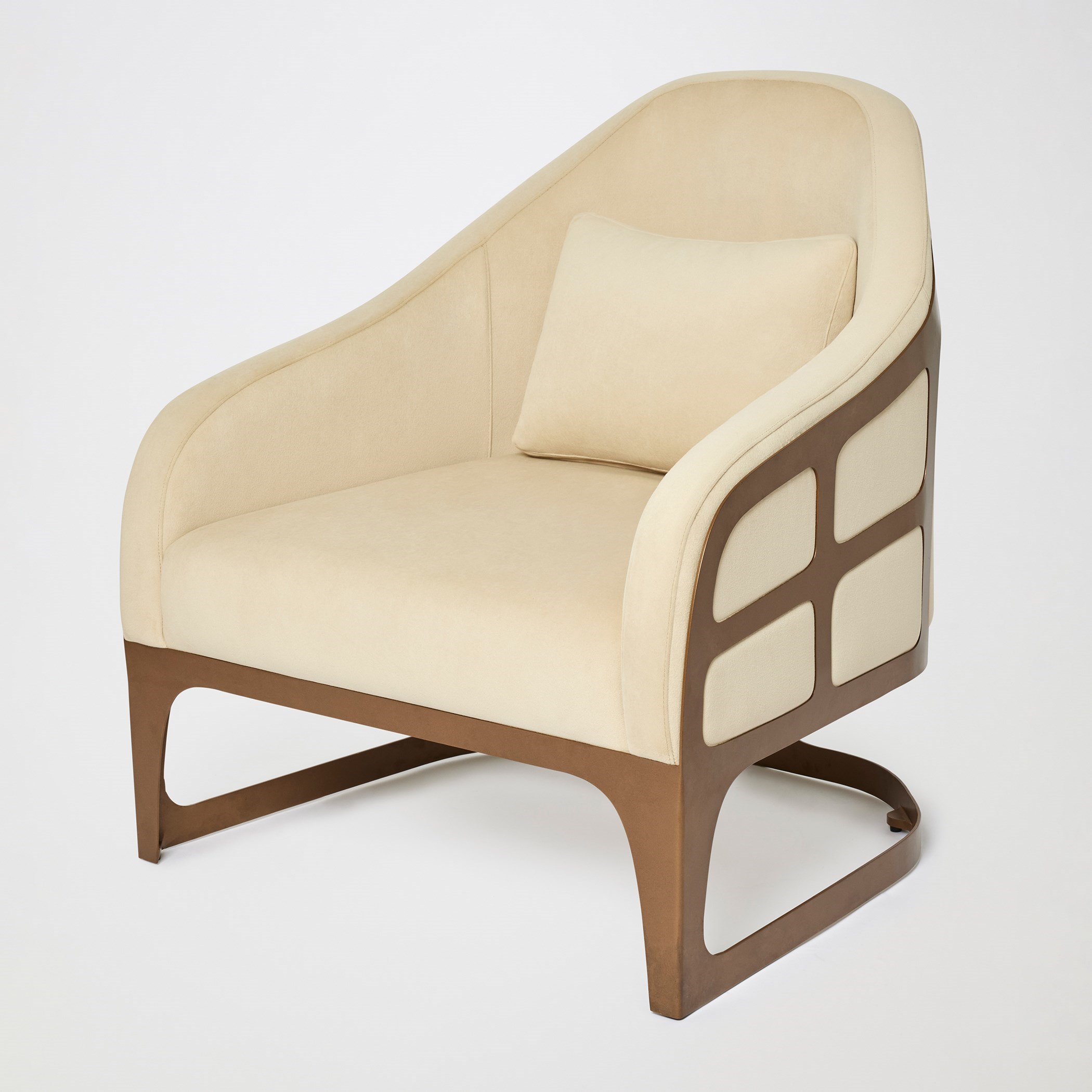
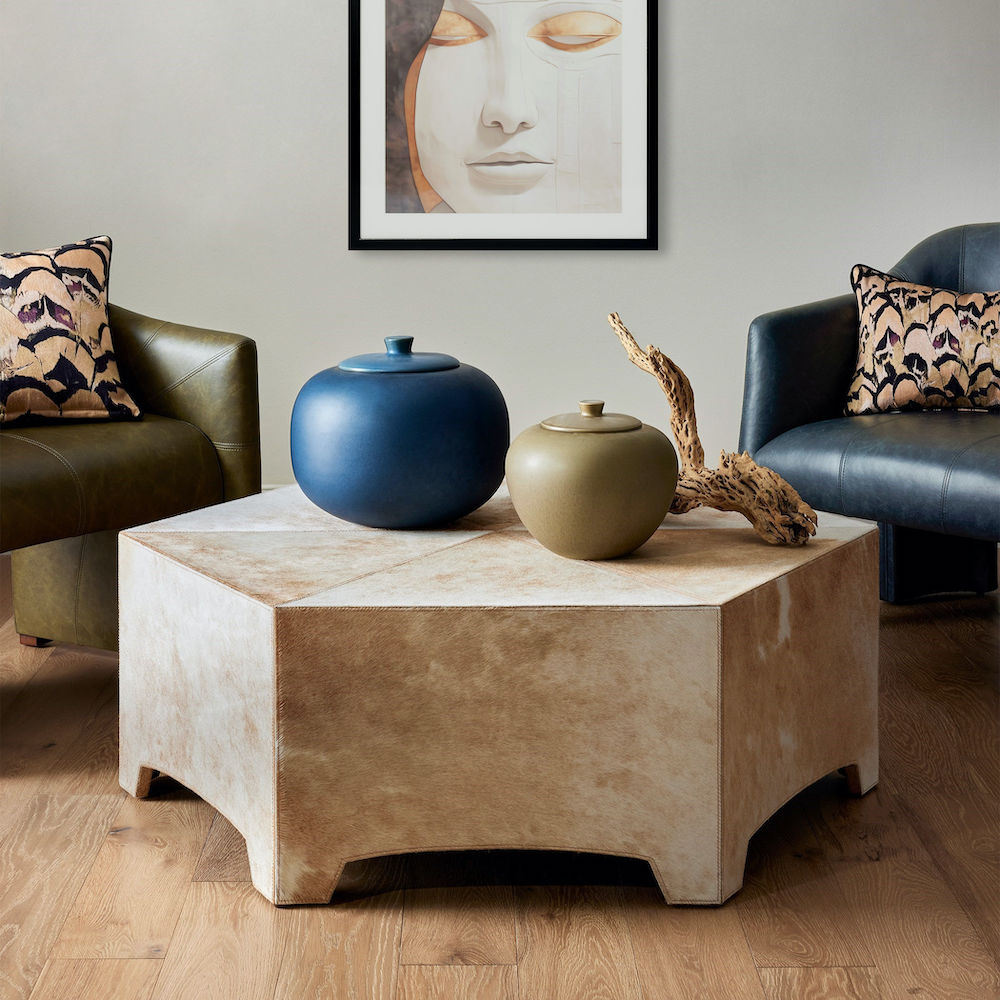
I’m also getting to bring in my Global Views furniture, rugs, art, and accessories (pictured above). These pieces are part of the High Point launch, and I’m getting to install them in a living environment here so that people can see the design universe that floats around in Jennifer Farrell’s head and how it has the moving parts of all my brands and brand partners. There’s not a piece I’ve designed that doesn’t have a whole universe of thought and concept behind it. With Global Views, throughout the collection, there’s a connection from piece to piece and in the way they all work together to create one entire vision. So, I may be creating one mirror or one rug, but there’s a story that brings them into the same universe. For me, that storytelling aspect of what I do is the part I relish most.
Many of the brands are return partners, which I value greatly, like Ferguson Home and Emser Tile. But we also have new brands that have come in as partners at the Interconnected Changeable Environments House. Grohe is providing all our faucets and kitchen sinks, and Duravit is providing all our bath china and furniture. So, we have these wonderful brands that I’ve personally worked with for two decades, but this is their first experience getting to partner with me at a showhome. And it’s so much fun for all of us. They’re getting to see the collaboration come together and getting to see their products with other brands’ products in a way that they normally don’t get to envision.
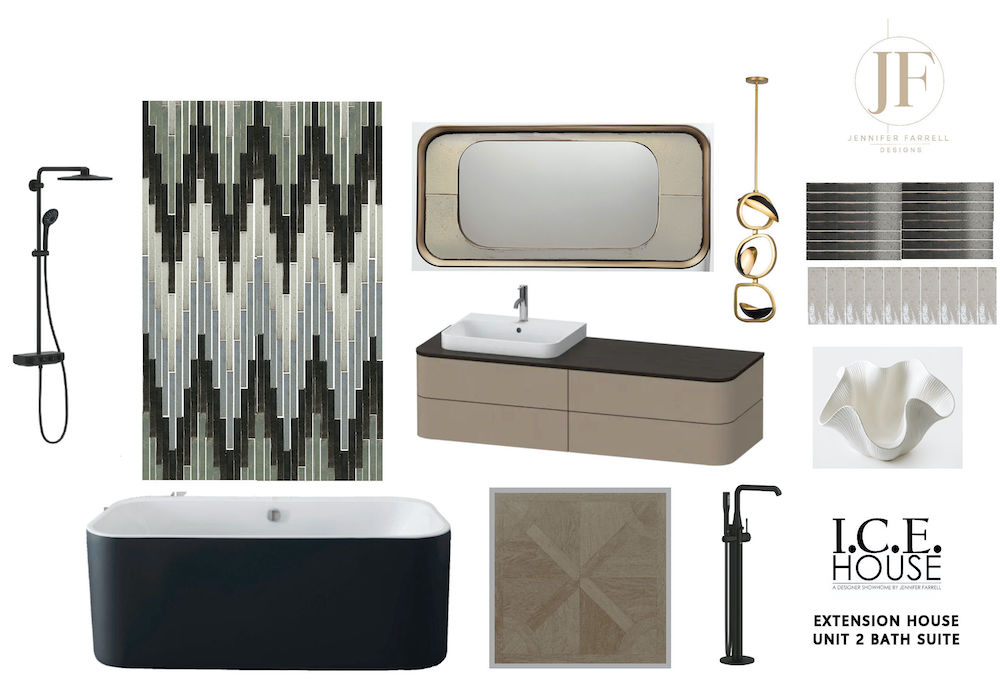
JQ: There are specific spaces where French lifestyles are making their mark in Extension House. Tell us about the water closets.
JF: After much debate, I decided to keep the water closets. In Europe, and particularly in France, the water closet is a traditional way of separating the toilet in its own room from the bathing room, where you would have a sink to wash your hands and a shower or tub or both. When I first came here, with my American sensibilities, I said, “Well, of course I’m going to knock down those walls, so the toilets are in the same room as the tubs and the sinks.” And then I thought: Why would I come all the way to France to turn this into an American house? And so, I had to sort of let my hair down and become a little French in that respect. Now, I’m finding the water closet is just such a brilliant idea, and I don’t know why we ever want to have our toilet in the same room as our bathtub and our hand-washing place.
What’s really fun is, in each of those spaces, I’m going to tell a different design story; they’re all connected, but they’re all wildly inventive in their personalities. Each of these tiny water closets has a magical tile story going on the focal wall. You’ll see in each of the water closets, the bathrooms, and the shower rooms a fantastically interesting and inventive vanity and sink combination from Duravit. Each also has beautiful Grohe faucets and Emser tile being installed in some pretty fantastical configurations, some that will really surprise, and so you’ll open the door to this little water closet and get a big smile on your face. How often is it that you walk into a toilet room and get a big smile?
JQ: This deep connection to the partner brands is personal for you. Tell us why these relationships are so important.
JF: The way I create these showhome experiences is my own particular method, and there are multiple reasons I do it this way. First, the idea is to create design at its finest, showcasing the best of brands. And, in doing that, it should be an eye-opener for everyone involved — the brands, the design community, consumers, and design lovers. They’re getting to see a whole world fully fleshed out that brings myriad brand partners together for one cohesive, elevated concept.
I also do this because I hope that, in the end, my gift will have been to be a creative storyteller and a great cross-branding collaborator. I think I’m good at bringing people together and matchmaking, and I love being able to do that. The brand collaborations that have been initiated here have already begun to lead to new working relationships among my brand partners. I love creating those opportunities — to spot the synergies and see the relationships grow.
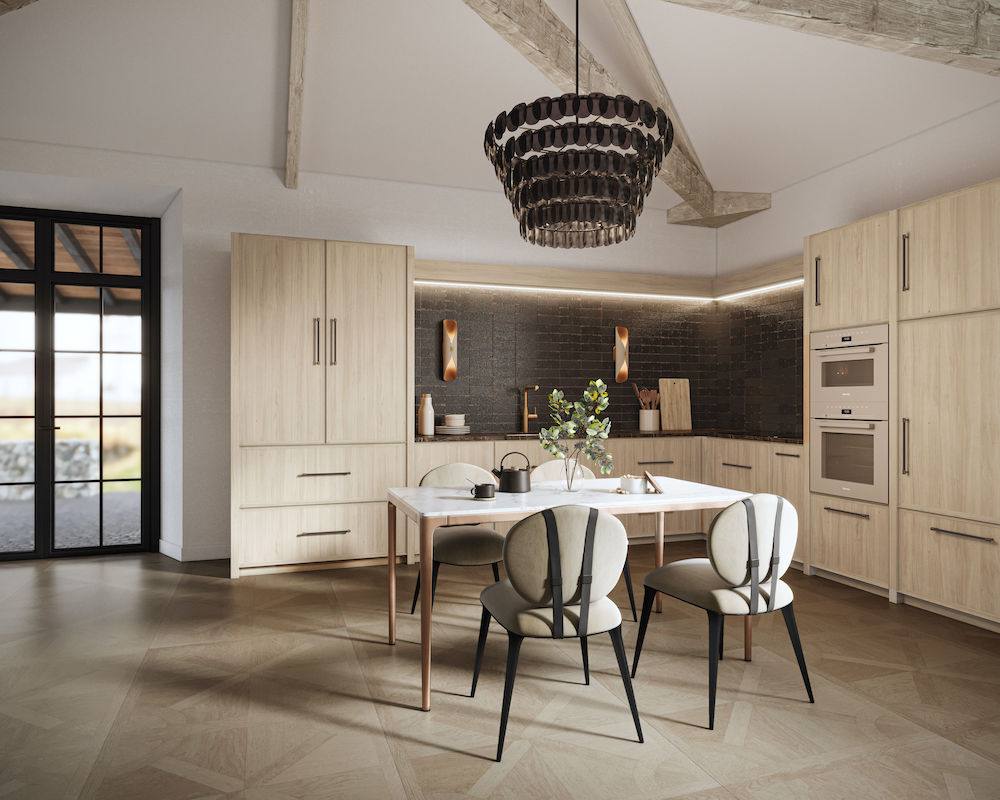
JQ: We’ve talked about your favorite moments in each of the houses. How do you feel when you spend time in Extension House?
JF: The sense of fun is what I’m most excited about in Extension House. I’m a designer who always loves to have some kind of whimsical something in a space that brings a sense of joy and a smile. And there are those moments in all three of the interior environments and in the exterior as well — things like swing chairs hanging from a balcony. There’s a sense of play and youthfulness in Extension House for me. As the house that changes the most of the three on this property, whenever I’m there, I feel like I’m actually walking into a teenager in a way, like I’m stepping into a teenager who’s changing by the minute. And Extension House can literally change by the minute. We can slide open a wall and, instantly, it’s changed. So, the house itself feels like a teenager to me in that it’s growing and changing at every possible moment — at every turn, it’s maturing into something fantastic and beautiful.
JQ: We know the views change often across the property. Tell us about the vistas from Extension House.
JF: One of the things that surprises me to this day is that everywhere you stand on the property, you’re looking at a completely different view than five feet ago. I keep getting surprised by that. For the formal entrance to Extension House, you come in through a gate, and it has its own little driveway. At the entrance, you’re right next to this 500-year-old windmill that is surrounded by our fruit orchard. And, yes, we still are looking at the vineyard here, but because of the windmill, you don’t see the courtyard when you’re first driving into the property — it reveals itself more slowly. There’s something just very romantic about it, and it can feel like a secret universe that you step into: The gates open and here’s this beautiful, ancient windmill tower and this private little enclave; then, as you move into Extension House, each of the rooms has a very different view, even though they all face the same direction. This still confuses and surprises me with delight because, technically, they’re all facing toward the vineyard, yet the way the windows are framed, each individual vista is like a picture-perfect postcard. I like to just stand in the windows and look out over the pool and the courtyards and the little seating areas, and the setting sun. It’s pretty magical.
JQ: Personality, connectivity, and a feeling of joy and play are recurring themes. How do you make sure each space is both special and cohesive within the larger project?
JF: Each house has its own distinct personality, and that is something that’s very important as I’m telling this story. Who wants to walk through a house where every room looks the same? This is a very large property where the three homes together are about 5,500 square feet. You have six bedrooms and eight bathrooms, and you don’t want to look at eight bathrooms that are all alike. We want to have something interesting, and yet there has to be a through-line. That is very important to me in the storytelling journey here.
One of the elements of play that has now become a signature at all my showhomes is actually from my husband, Mark. He has built a golf hole at every single showhome, and that has always been something that has been very enjoyed. At every single showhome opening, there have been people playing golf, whether it was on a putting course or a driving hole. To have to one-up the 90-yard pitching hole he created at Calibu Vineyard was not easy, but he has now set up two separate holes and a driving tee so you can really play a lot of golf here. What’s funny is that golf is not very popular in France, so one of the fun things has been introducing the locals to hitting golf balls. It has been a lot of fun teaching young and old about a sense of play here at the house.
JQ: Do you feel the French way of life melding more and more with your California roots?
JF: It is really great here, and it’s great in a way that I’m taking into my soul and really processing. I’ve heard all my life and have romantically espoused to the idea that the southern French way of life is very charming, and the people are lovely, and the vistas are beautiful, and the lifestyle is based around joie de vivre. Being here now on a daily basis, I’m understanding it all in a really different way, and it’s much more impactful than I had anticipated.
I love America, and I love California, and I love Los Angeles. I’ve been an Angeleno for 30 years, and I love those parts of my life and my heritage. But being here is changing my core desires. It’s affecting me in that, being here, I really am beginning to understand in a visceral way what joie de vivre means and what quality of life means. And I have a beautiful quality of life in California, but there’s a different feeling in the air here, like when we’re walking down the road at sunset here, and not one car passes. We can walk for 45 minutes and the only person we’ll see is one of our neighbors who is a farmer and owns hundreds of vineyard acres here. He will stop his car and get out and do the double kiss on the cheek for me and for my husband, and just stand with us and talk for a while before driving off home. I will wake up in the morning here to a text from a friend who says she’s left a basket of vegetables from her garden on the porch. And this isn’t just once; it’s dozens of times. There’s a real reach-out from everyone here — from friends to total strangers — a reach-out of kindness and compassion, of personal human connection. There’s a sense of calmness that comes from that — from walking through the world here and everyone smiling at you and saying hello. It changes the way you interact with people.
I will not give up my home in L.A., but I will probably be spending a lot of time here in the future.
Like what you see? Get it first with a subscription to aspire design and home magazine.