
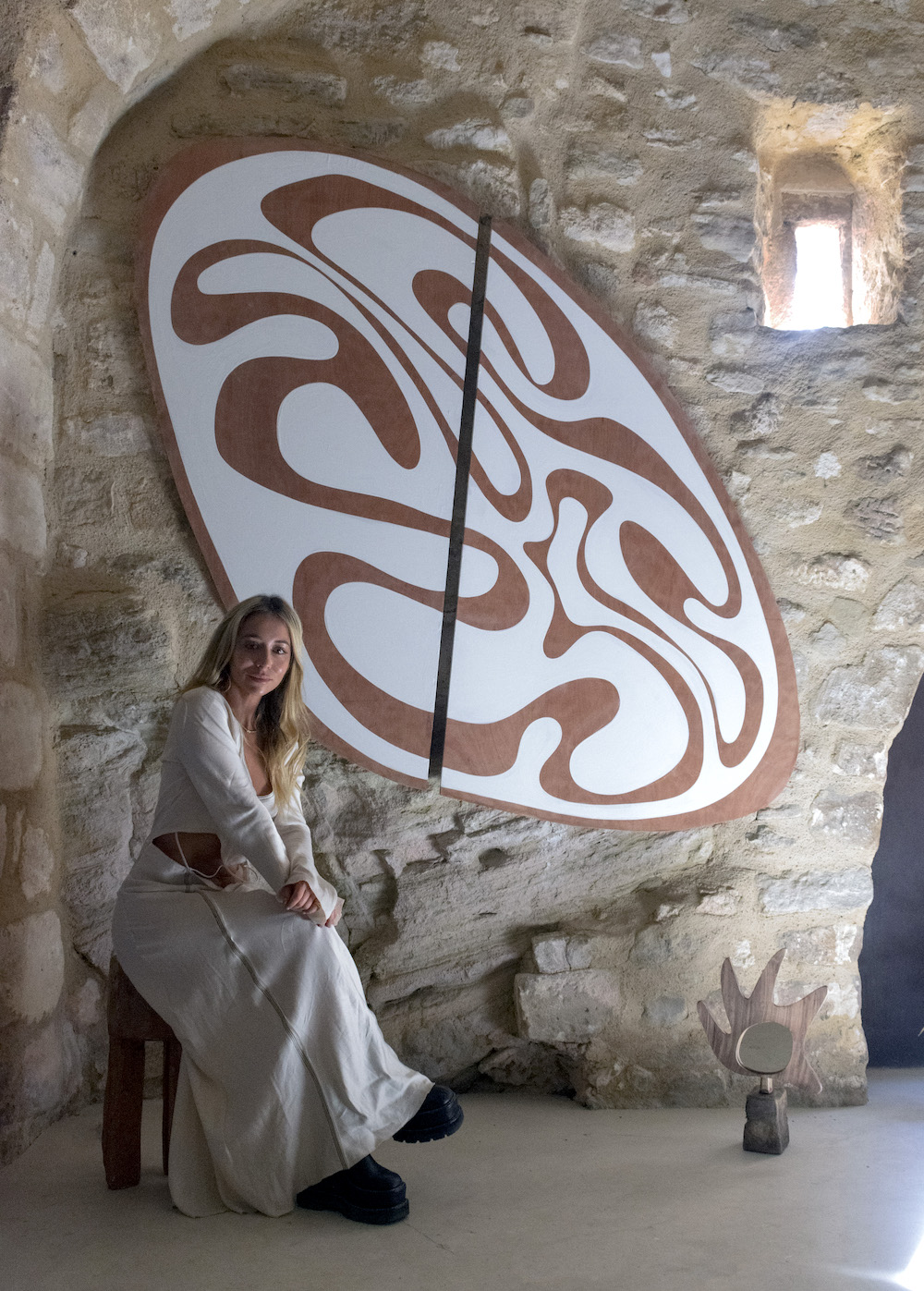
Fresh off the heels of her artist residency at the Savannah College of Art & Design’s Lacoste campus, multidisciplinary artist and designer Hannah Polskin is returning to her Los Angeles studio with a fresh take on reclaiming the past to create something completely new.
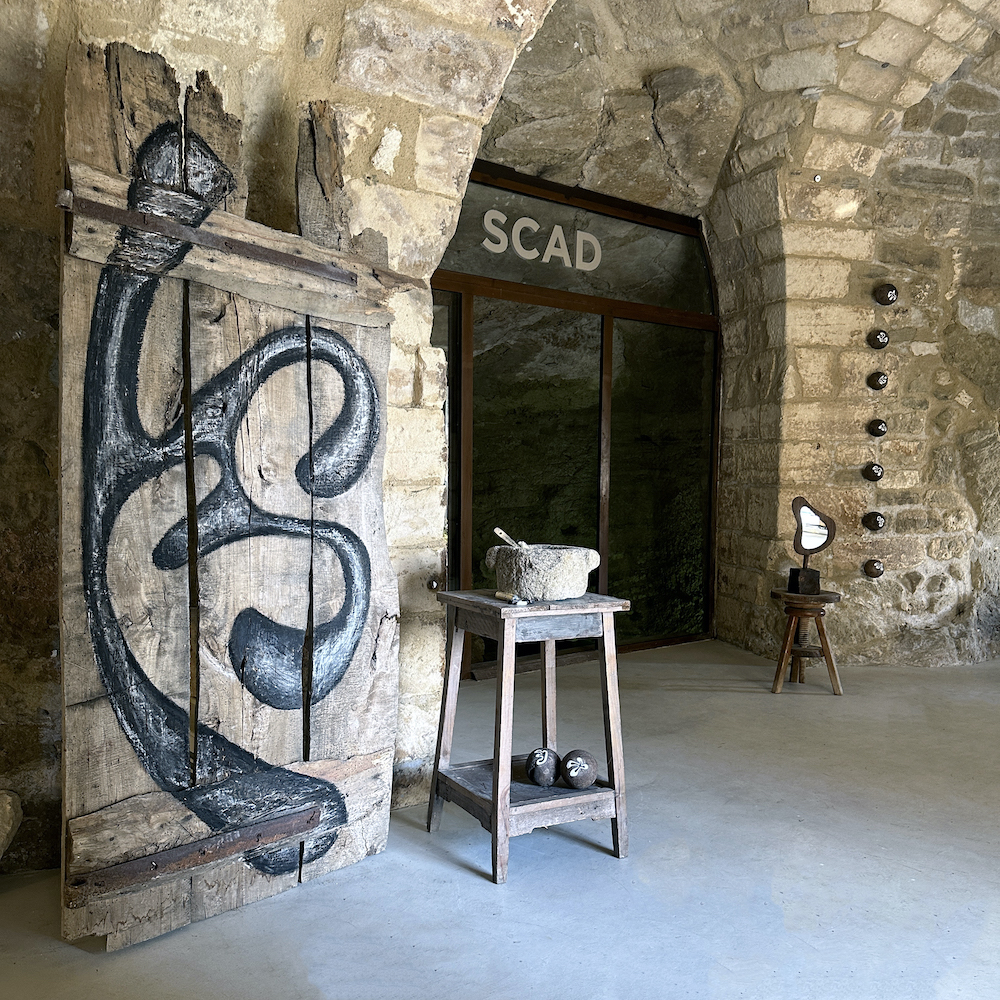
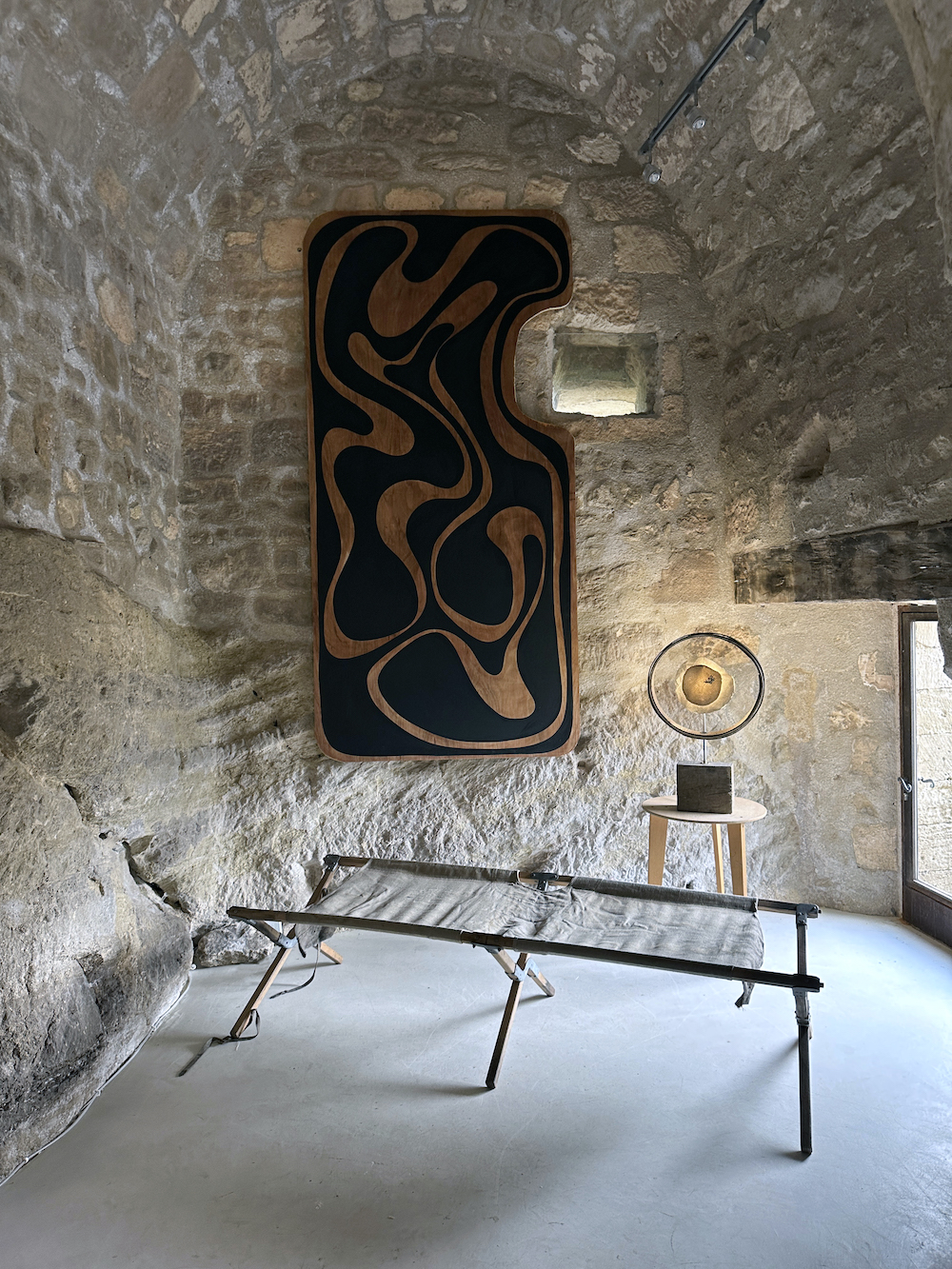
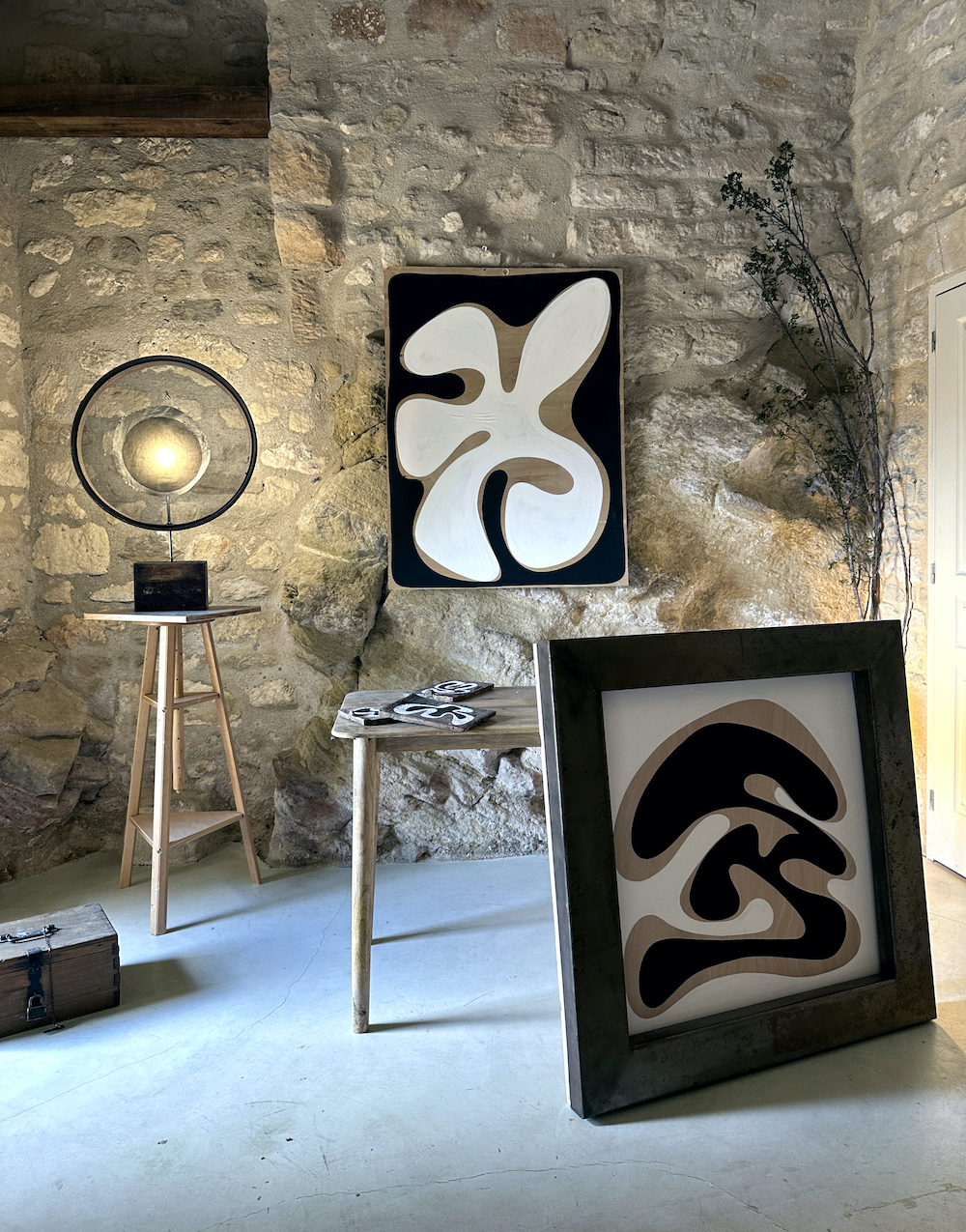
Herself a SCAD graduate, Polskin was selected for the prestigious SCAD Alumni Atelier, a 10-week residency in Provence that invited her to create a one-of-a-kind collection. The resultant improvisational works—dubbed “Landmark” and shown in the unique setting of the university’s medieval caves—reimagine locally found and salvaged items through the freeform aesthetic lens of the artist. The regional nature of the materials used for the new pieces ties Landmark intrinsically to Provence and adds a new dimension to Polskin’s ongoing portfolio of “livable art.”
aspire design and home talked with Polskin about creativity, inspiration, and the thrill of discovery.
Jennifer Quail: New York, Savannah, Los Angeles … you’ve lived in some very big creative towns. How do we see the influences of the places you’ve spent time in your work?
Hannah Polskin: I’m always reacting to the spaces I work in; I think more so than the cities themselves. The context of the art is critical to my process. I often am inspired by a blank wall in my home that will spur an idea for a new painting, mural, or mirror. SCAD Lacoste feels like the first place I’ve ever lived where the artwork feels entirely tethered to the location, which was a key design element for me going into the artist residency.
JQ: Was there any particular theme or guidance provided for the SCAD residency? Or was it an open-ended invitation to create? What were your thoughts going into it?
HP: There wasn’t a particular directive, and it was so refreshing to have a blank slate and come up with the concept. That’s something the SCAD Atelier does so well: trusting their artist alumni to bring their own ideas to the table and steer. From the outset, I knew I wanted to create a collection that could only be made in Provence, something with materials unique to the region. Antique shops and flea markets have always been my happy place and from my early research it looked like Provence would be a hotbed for this. Luckily the treasures I found became the bedrock for my Landmark collection.
JQ: Tell us about the Landmark collection. The improvisational use of locally reclaimed materials is very interesting—how did the idea come about?
HP: The whole idea with Landmark was to reclaim found objects from the region, letting the Luberon landscape leave its mark on the work. It was important to me from the beginning that if I was creating in a historical place that dates back to Roman rule, I wanted to honor that provenance and work with local materials that had that same heritage. It started with a tiny grain of an idea, to start using salvaged wood, whatever I could organically get my hands on in Provence, instead of the pristine Baltic Birch I had been working with for the last few years. But by the end of it, not only was I painting on decades-old pieces of wood, but I had also started transforming antique objects into works of art. My inner compass always points toward the nearest flea market and Provence was an absolute treasure trove for antiques. Turn of the century Pétanque balls, pre-industrial-revolution mallets, old masonry sieves, and ancient doors with original rusted hinges are just a few of my findings that I manipulated into something new. Each time it was like working with a tiny history text, and I was delighted to find that sourcing and researching each item had its own masterclass wrapped up in it.
JQ: Do you have a favorite piece within Landmark? Tell us about it and what makes it special for you.
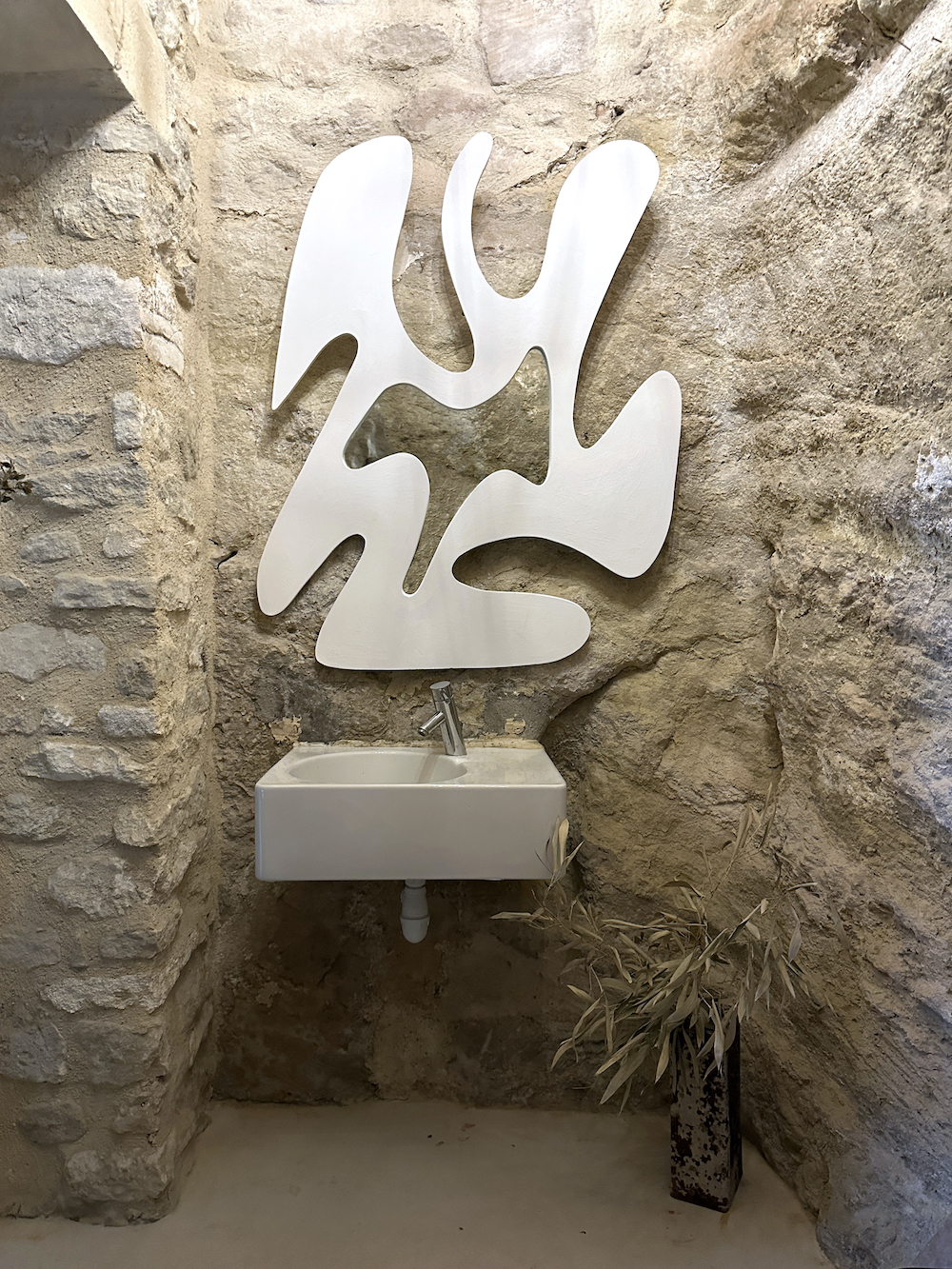
HP: I feel very connected to Le Maillet, a mini mirror where I’ve reclaimed an old mallet for a stand. I’ve wanted to explore standing and vanity mirrors for a while now and it’s been so interesting to get off the wall and work in the round with something more sculptural that functions like an object. To me this piece represents a bridge from my earlier work to a new direction, pushing my undulating shapes forward with salvaged pieces from the past.
JQ: Now that the residency is complete, where can the Landmark pieces be seen?
HP: The entire collection can be viewed on my site and I have a select few pieces that I couldn’t part with that will be viewable by appointment at my Los Angeles studio. I was honored to have SCAD acquire some of the works from the collection, and thrilled to partner with a local Provencal gallery, Maison Lorence, on exhibiting some of the larger works. I would love to stay connected to the French art scene.
JQ: What’s next for you?
HP: I’m so excited to now take these works out of their native habitat and view them in a modern setting. As stunning as the cave atelier was, I’m intrigued at the prospect of these rustic works set against the white walls of my Los Angeles studio. I think the juxtaposition could be really interesting.
This project was funded through Founder and President Paula Wallace’s endowment, Alumni Atelier for Alumni Development with the Savannah College of Art and Design.
Photography by SCAD Student, Patrick Moreno.
Like what you see? Get it first with a subscription to aspire design and home magazine.