
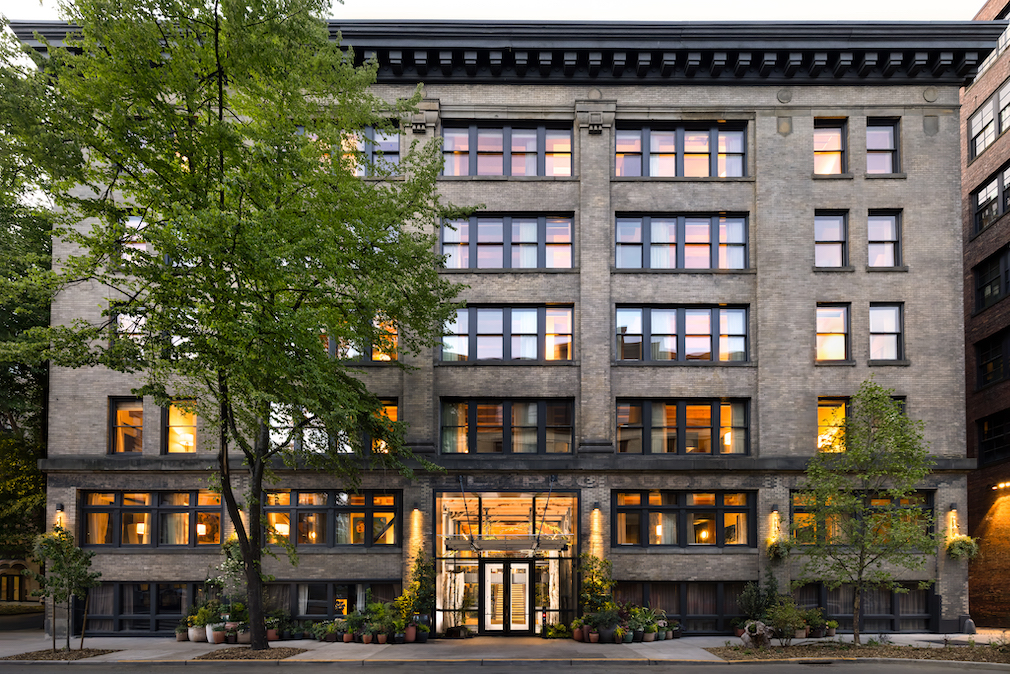
Conventional wisdom might suggest the only way to deepen your connection with Mother Nature is to go outside; to trade in a high-end hotel for a haphazardly assembled tent. Touch grass, so to speak. But at Populus Seattle, a new property in the metropolis’s Pioneer Square, the great outdoors and indoors cleverly and conveniently converge. Here, it’s possible to honor the environment without abandoning today’s modern comforts.
As the second of its kind — the hotelier opened its inaugural Denver location in October 2024 — Populus Seattle touts itself as a carbon-positive accommodation that celebrates and protects the natural world. Skeptics might be used to properties green-washing their reputation with reclaimed wood, LED lightbulbs, and not much else, but Populus practices what it preaches. For starters, there’s the Populus One Night, One Tree program, in which the hospitality company plants a tree for every night’s stay. The building itself is another perk: The Seattle outpost preserved and revitalized the Westland Building, a plumbing facility from 1907, and reduced its carbon footprint by 36 percent.
Populus Seattle is a love letter to the environment, so it was important to have interiors that also held up to the property’s promise. Enter Curioso, a collective of designers, architects, and artists that brought the hotel’s vision to life. For Carlos Herrera, the firm’s lead studio designer, it was important to balance sustainability with a sense of place.
“We’re giving Pioneer Square something they needed, but it stems from something they already had,” Herrera explains. “There’s a lot of grittiness in Pioneer Square, so we were able to complement it by showcasing the beautiful building that we had to work with.”
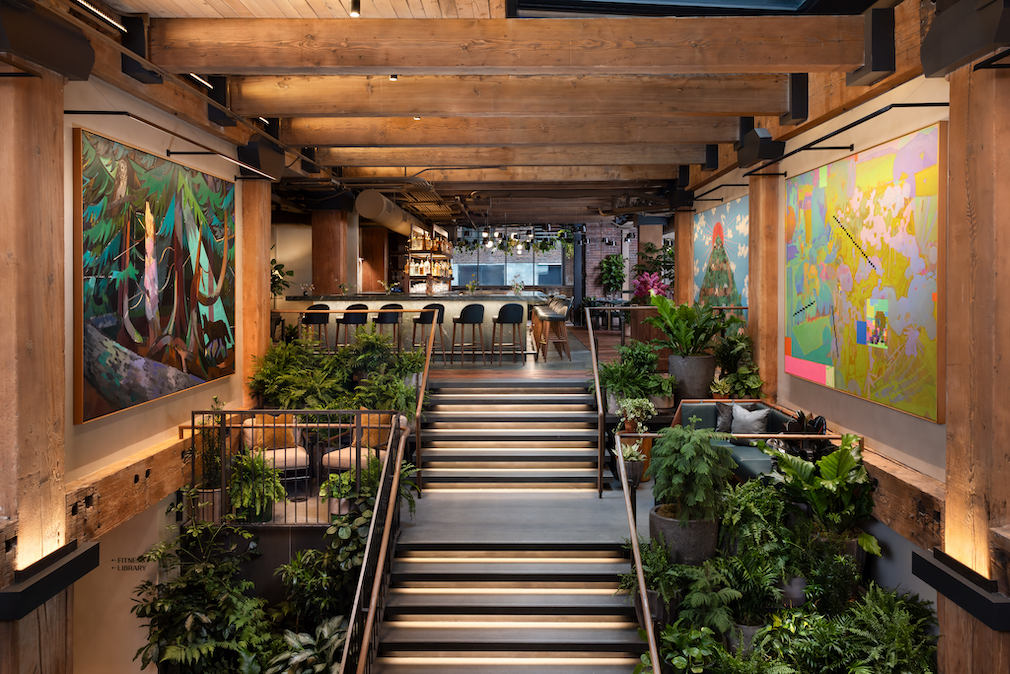
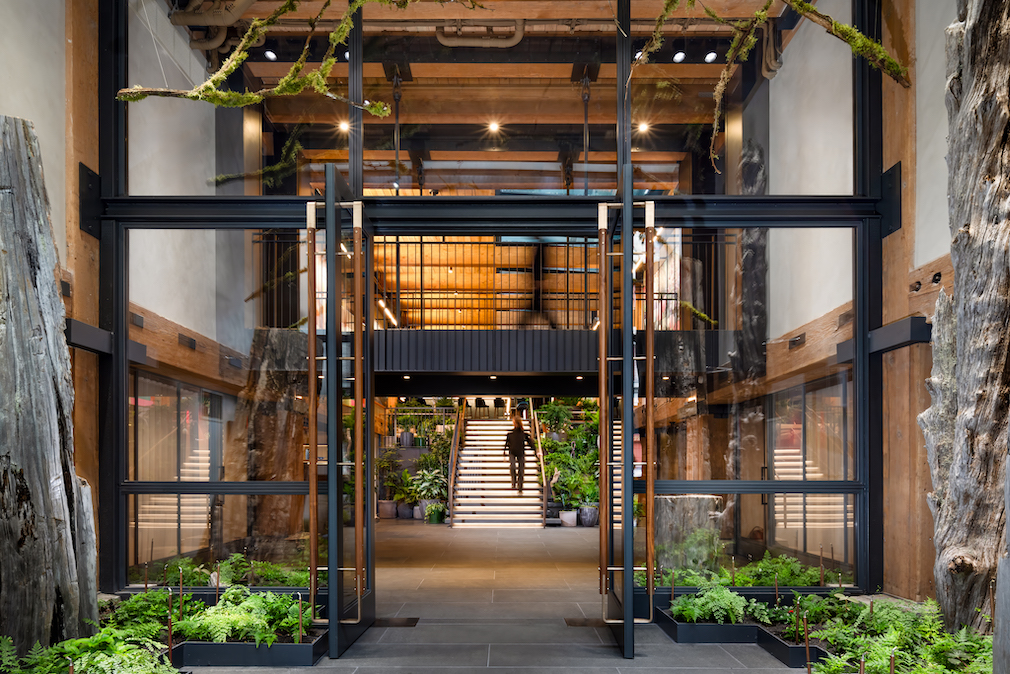
Prepare to be transported to an otherworldly, outdoor-inspired oasis from the moment you step inside. Once guests pass through a glass vestibule that houses the resident ghost forest, a subtle nod to the marsh that once occupied Pioneer Square, they are confronted by a dramatic, double-height lobby. The wood-clad foyer is awash in a rotating assortment of colorful, large-scale pieces made by local artists, which can be purchased should you want to bring a bit of Seattle home. Meanwhile, a foliage-filled staircase brings the Emerald City moniker to life.
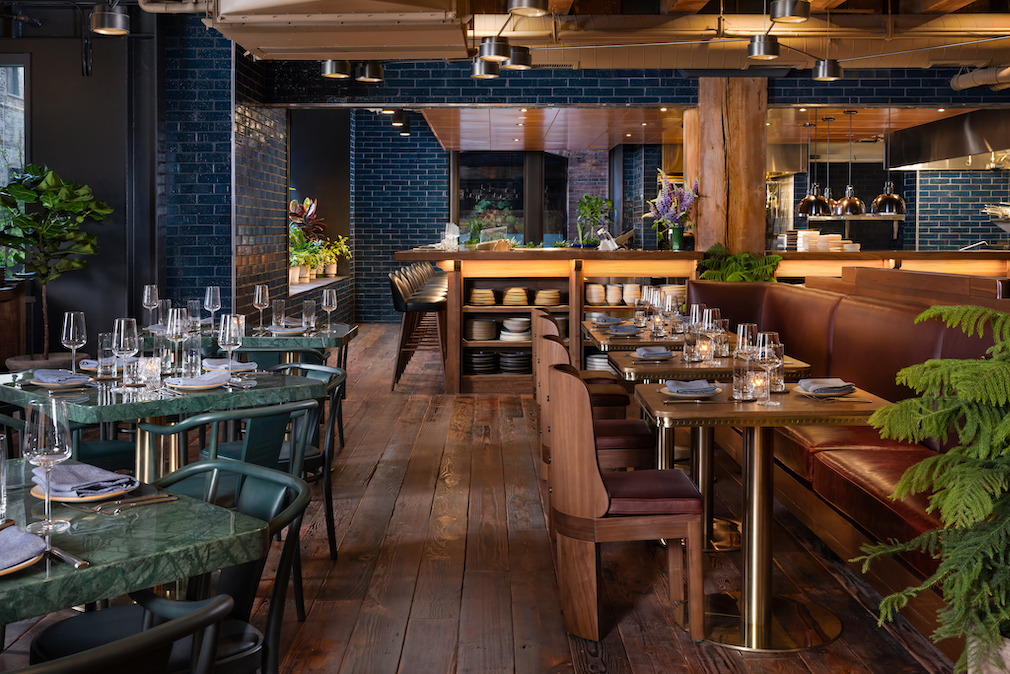
Not only did Herrera pay homage to the city with a surplus of wooden details — he says Curioso sourced as many local materials as possible — but in the smaller moments, too. Step into Salt Harvest, the property’s on-site restaurant, and you’ll see an intricate light fixture crafted to mimic constellations that are visible in the Pacific Northwest. “You wouldn’t believe the number of hours that were spent on making sure the lighting design was under a certain wattage output for the building,” he notes, underscoring the hotel’s commitment to sustainability.
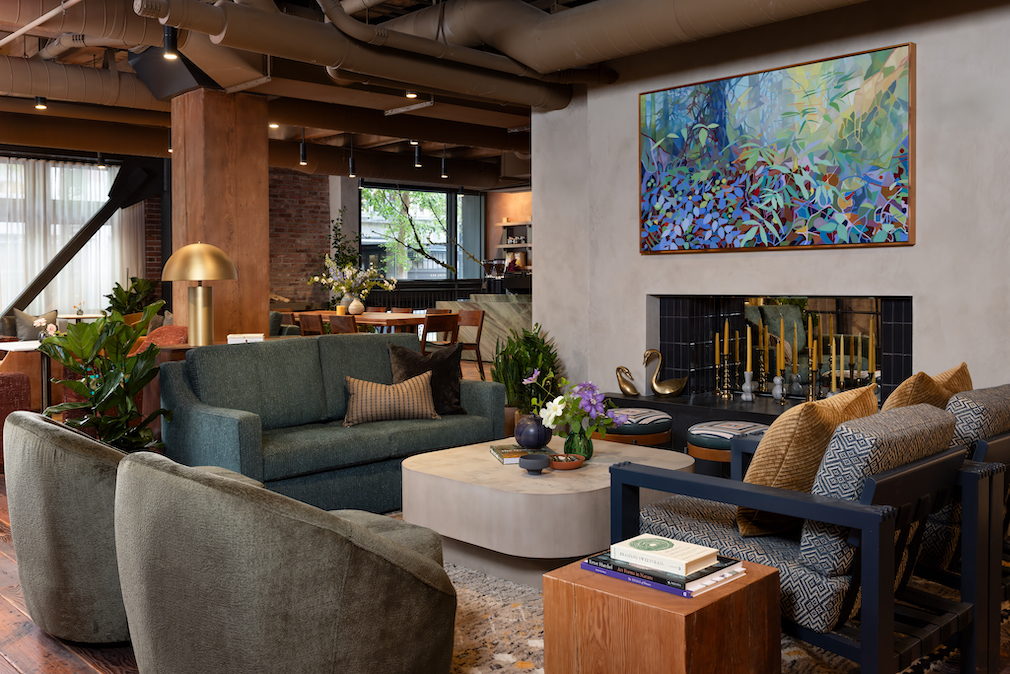
Meanwhile, a nature-inspired palette brings a grounded quality to the site. “We wanted to create a space that was timeless and could adapt for years to come,” Herrera says. “It was really about focusing on a palette that could accommodate new art and furniture.” In Populus Seattle’s common area, the building’s “pronounced posture” is juxtaposed with plush materials and curvy silhouettes. “We were able to complement the architectural bones with softer, more sensual lines,” Herrera says.
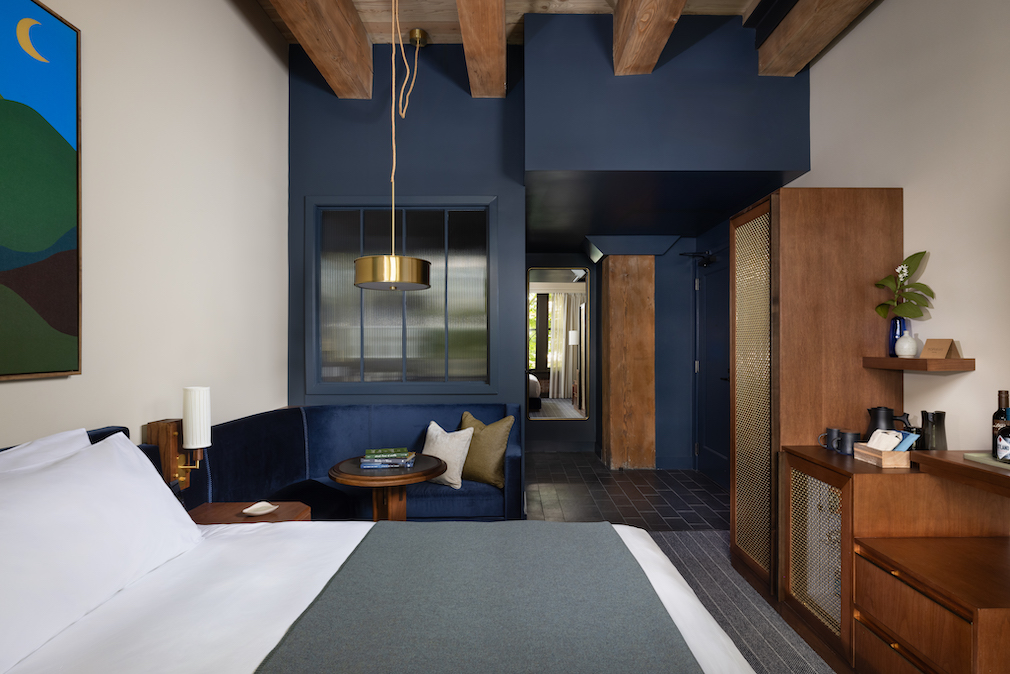
That tension between hard and soft continues in the hotel’s 120 guest rooms. “All the woodwork nods back to the Craftsman style that was popular when the building was constructed, but the upholstery has those softer curves,” he says of the private spaces. “The goal was to create a respite from the surrounding areas; the desire to get away from the hustle and bustle.” Each guest room is also outfitted with hints of fluted glass that mimic the effect of dappled light. A forest-like glow from within, if you will.
The hotel might be redefining sustainable hospitality, but it’s the first step toward the city’s future. Populus Seattle is part of RailSpur, a micro-district in Pioneer Square that will imbue culture and community through three historic buildings and their adjacent alleyways. Both the hotel and the district — which will soon be rife with bars, restaurants, and public programming — are the brainchild of Urban Villages, an ethos and eco-driven development group. For Jon Buerge, president of Urban Villages, both Populus Seattle and RailSpur are creating “environmental stewardship.”
“The best way to protect the environment is to experience nature, and our purpose is to introduce people to the beauty of nature,” he explains. “We wanted to leave the planet in a better place than we found it and make nature the centerpiece of the experience.” Mission accomplished.
Like what you see? Get it first with a subscription to aspire design and home magazine.