
 Eddie Maestri, AIA, is the founder and creative director of Maestri Studio, an award-winning architecture and interiors firm known for its layered, story-rich spaces that blend historic sensitivity with modern soul. What began as a design studio has evolved into something even more expansive with the creation of Maestri Gallery, a retail and exhibition space located in Dallas’ vibrant Exposition Park. Just steps from Deep Ellum and Fair Park, the gallery is a celebration of art, style and all things beautifully curated. It showcases Eddie’s ever-evolving creative point of view, from regional artworks and unique finds to Maestri Studio’s own bespoke furniture and sculptural mantel collections.
A standout within this offering is the Arcana mantel line, a series of architectural pieces that reflect Eddie’s passion for heritage-inspired forms reimagined through a modern lens. These expressive, sculptural mantels — featured at the Kips Bay Decorator Show House Dallas and honored with a Silver at the New York Product Design Awards — are designed to feel timeless yet utterly fresh. Whether designing a future heirloom or an entire home, Eddie leads with the belief that great design should be both deeply personal and enduring. See the Arcana mantel line in today’s Maker Monday.
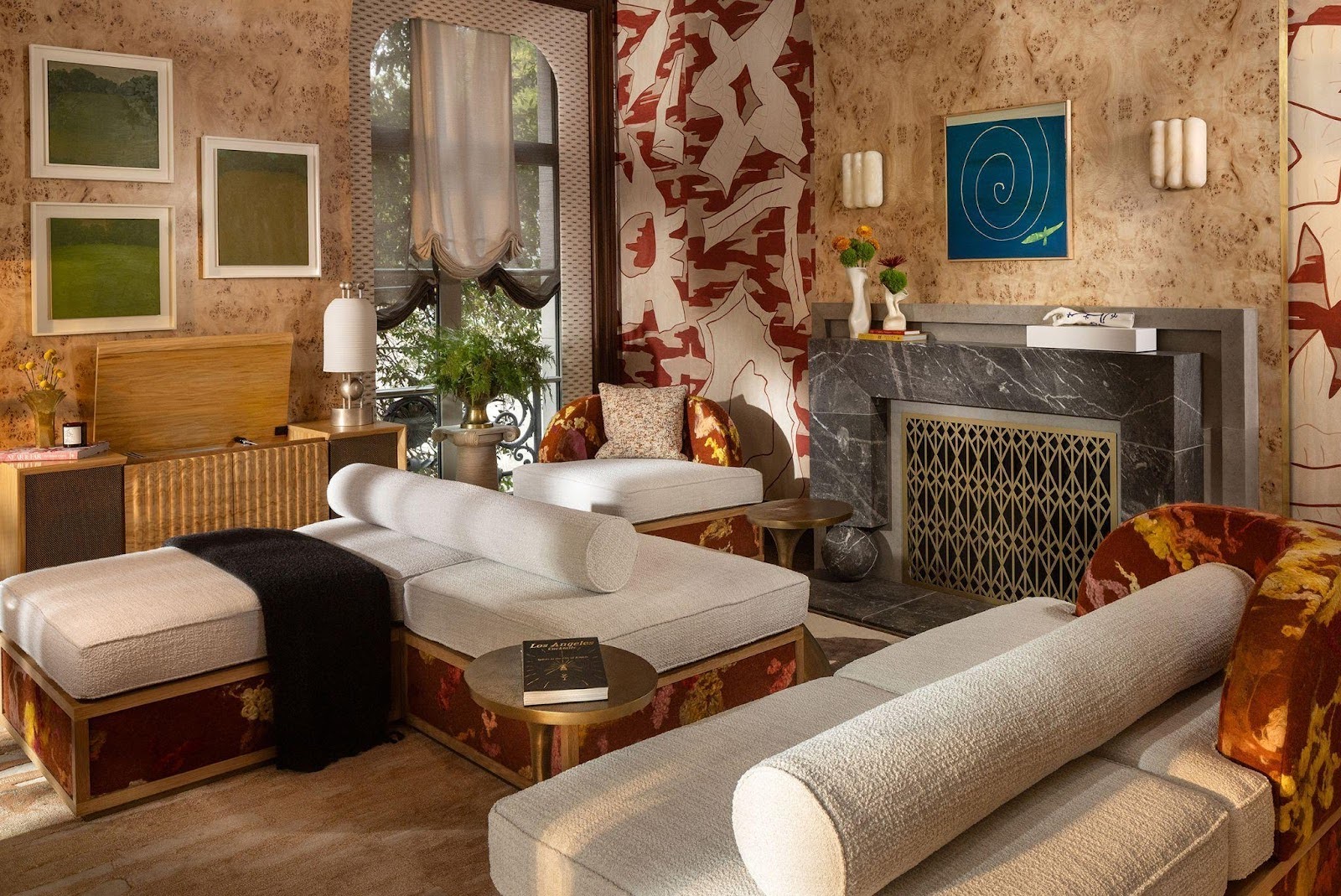
The Equilibrium mantel by Eddie Maestri makes a bold yet refined statement; its stacked geometry and dark marble ground this room with just the right amount of drama.
Andrew Joseph: What inspired you to become a designer?
Eddie Maestri: Growing up in New Orleans, I was surrounded by history, detail, and a strong sense of place. The homes had stories — you could read them in the millwork, the plaster, the ironwork. I used to sketch houses as a kid, not realizing it was design — I just loved how architecture could hold both memory and possibility. That eventually turned into architecture school, then into founding Maestri Studio. For me, designing is about storytelling through space — layered, deeply personal, and meant to last.
AJ: How do you stay creative and inspired?
EM: Travel is a big one for me. I find inspiration in the quiet geometry of a Japanese ryokan, the romanticism of a crumbling Italian villa, or even just a great storefront in LA. I’m also a sketcher — when I’m stuck, I put pen to paper. There’s something about drawing by hand that reactivates a part of my brain. That’s how the Arcana mantel collection was born, actually — through sketching what I wished existed: pieces that felt both architectural and soulful.
AJ: What’s your design pet peeve?
EM: Overly thematic rooms. A coastal house doesn’t need a seashell on every surface. Trust the materials, the proportions and the view — those do the talking. I always aim for nuance. A reference, not a replica.
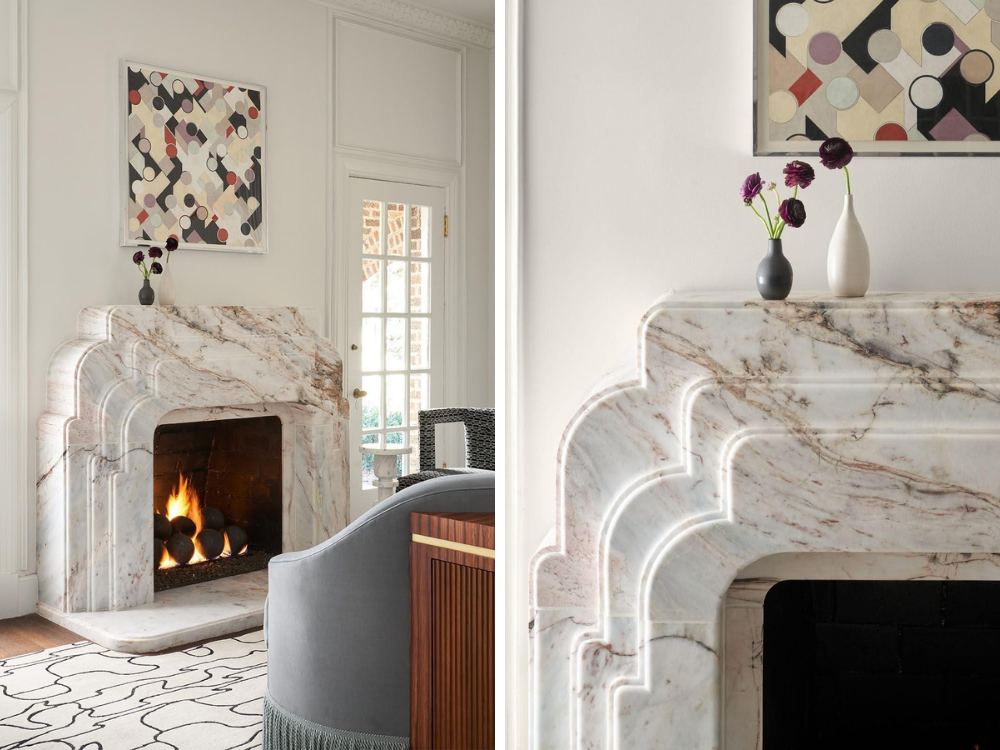
The Swiss mantel by Eddie Maestri turns traditional marble on its head with curving, stepped forms that feel both Art Deco and totally now.
AJ: Can you describe a project that you’re particularly proud of?
EM: Arcana is a project I’m especially proud of because it reflects our design DNA in physical form. We’ve designed hundreds of homes, and in that process, I kept wishing for mantels that felt timeless but unexpected, rooted in architectural tradition but still fresh. So I created them. One standout piece is Equilibrium, which we showcased in our space Le Salon de Musique at the Kips Bay Decorator Show House Dallas. It’s sculptural, moody, and deeply architectural — exactly what we wanted that room to feel like. Seeing it come to life in such a storied setting was incredibly rewarding.
AJ: How do you balance functionality and aesthetics in your designs?
EM: They’re two sides of the same coin. For me, beauty isn’t complete unless it works, and function doesn’t mean much if it doesn’t make you feel something. I often describe it as “emotional functionality.” A space should make your daily life easier and elevate your mood. That principle carries into Arcana too; our mantels are sculptural, but they’re also built to perform, whether that means heat resistance, scale or how they integrate into a room.
AJ: What would your dream project or dream client be right now?
EM: I’d love to collaborate with a boutique hotel or retreat property — somewhere we could design not just the spaces but the atmosphere. I think Arcana would be incredible in that setting too, where each room has its own mood and sense of narrative. There’s something really exciting about creating spaces that people step into and remember.
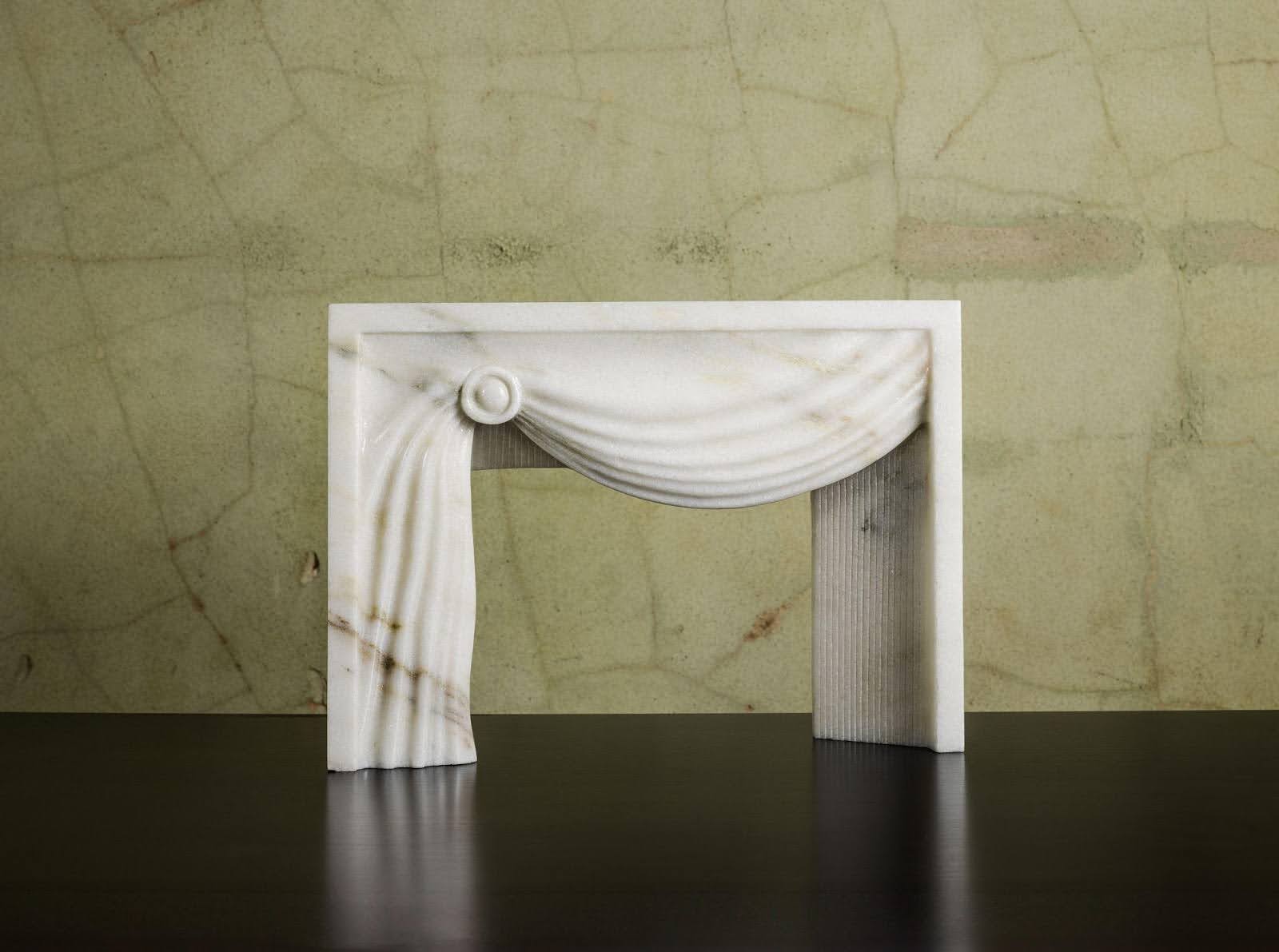
The Palais mantel channels old-world elegance with a wink, turning carved marble drapery into a moment of pure theatrical charm.
AJ: What is your favorite design era and why?
EM: I have a soft spot for the Art Deco era — its geometry, its optimism, the richness of detail. There’s something incredibly glamorous yet grounded about it. You see hints of it in our work, from custom millwork to the sculptural forms in our Arcana collection. It’s a reminder that function and beauty can — and should — coexist.
AJ: How do you incorporate client feedback into your designs?
EM: Design is a collaboration. We bring the vision, but our clients bring the soul of the space. I always tell clients: give us the “why,” and we’ll solve the “how.” Whether it’s a family heirloom that needs a place of honor or a specific need for entertaining, we design around those priorities. The best projects are the ones where trust runs both ways — and where the final space feels unmistakably theirs.
AJ: What’s the best piece of advice you’ve received as a designer?
EM: “Don’t be afraid to start over.” Whether it’s a drawing, a detail, or an entire scheme, sometimes the best decision is to let something go so the better idea can come through. It’s something I’ve applied across the board — from our client work to product design to how we evolve as a studio. You have to trust the process, even when it means beginning again.
Like what you see? Get it first with a subscription to aspire design and home magazine.