
 Jackson Schwartz is a multidisciplinary artist and visionary whose work lies at the intersection of art and craft combined with social and economic infrastructure. As the founder of Hennepin Made, Jackson is reshaping the relationship between the artist, the object, and the community. His practice is rooted in the belief that art can serve not only as an aesthetic expression but also as a tool for cultural reinvention and urban revitalization. Jackson’s journey began as a glassblower, an art form he fell in love with as a teenager. After studying in Australia and later teaching in the U.S., he recognized the need for a sustainable model that could support artists beyond the traditional gallery system. This realization led him to create Hennepin Made, a 30,000-square-foot factory in Minneapolis where art, design, and craft converge. Here, he and his team produce one-of-a-kind lighting that is deeply connected to materiality and process, blending old-world glassblowing techniques with modern sensibilities. See how Jackson’s glass blowing draws the eye in today’s Maker Monday.
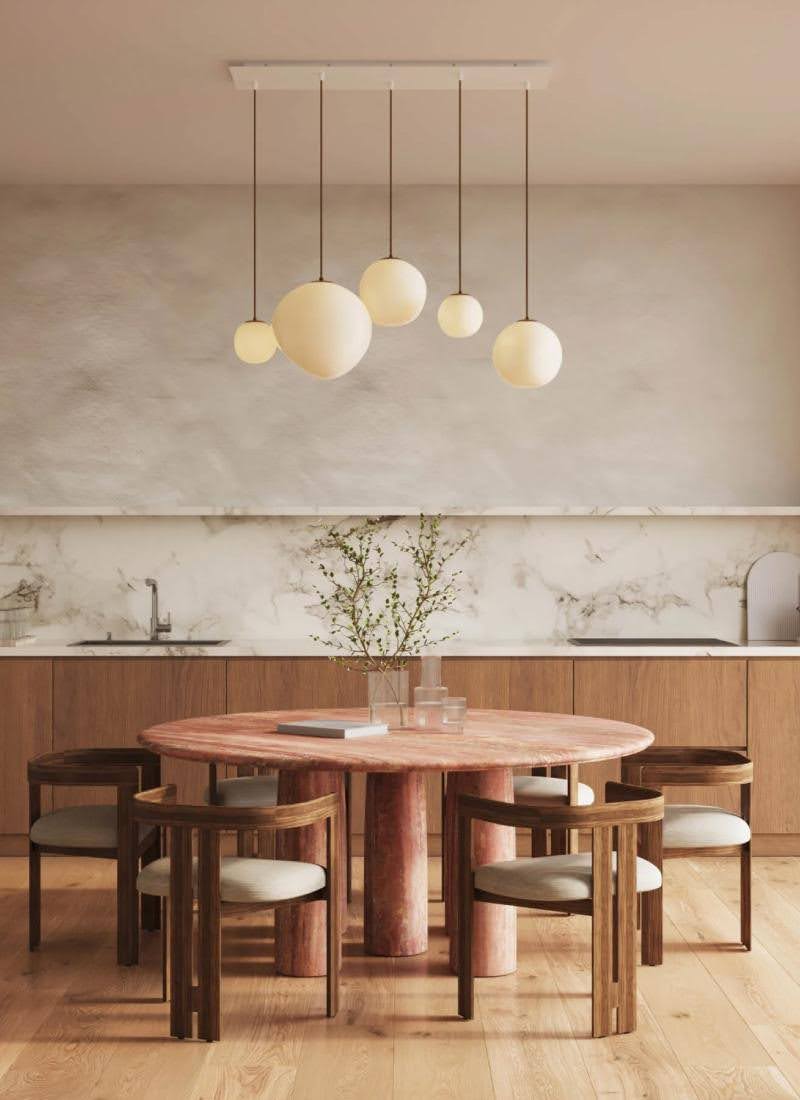
The Lacuna Collection is inspired by the vast skies of the Midwest, where shifting light and shadow across the clouds create a feeling of calm and wonder.
Andrew Joseph: How do you stay creative and inspired?
Jackson Schwartz: I make sure to stay close to materials and making. In my role, the responsibilities of leading an organization can move you further and further away from the making. While I don’t get to work in our studios every day, I make a concerted effort to make new objects consistently. It is part of my ongoing learning.
AJ: What was the last book you read and how did it inspire you?
JS: A Sand County Almanac by Aldo Leopold. It is inspiring because his insights really can only be garnered by spending time in the natural rhythms of the land and earth. Even 75 years later his ideas are still relevant to a contemporary moment of how humans relate to a planetary biosphere. His farm was just a couple hour drive from where I grew up in a rural setting, so there is a lot that resonates with my experience as a youth. It is inspiring to revisit a lot of those feelings of connection to the land and all its inhabitants.
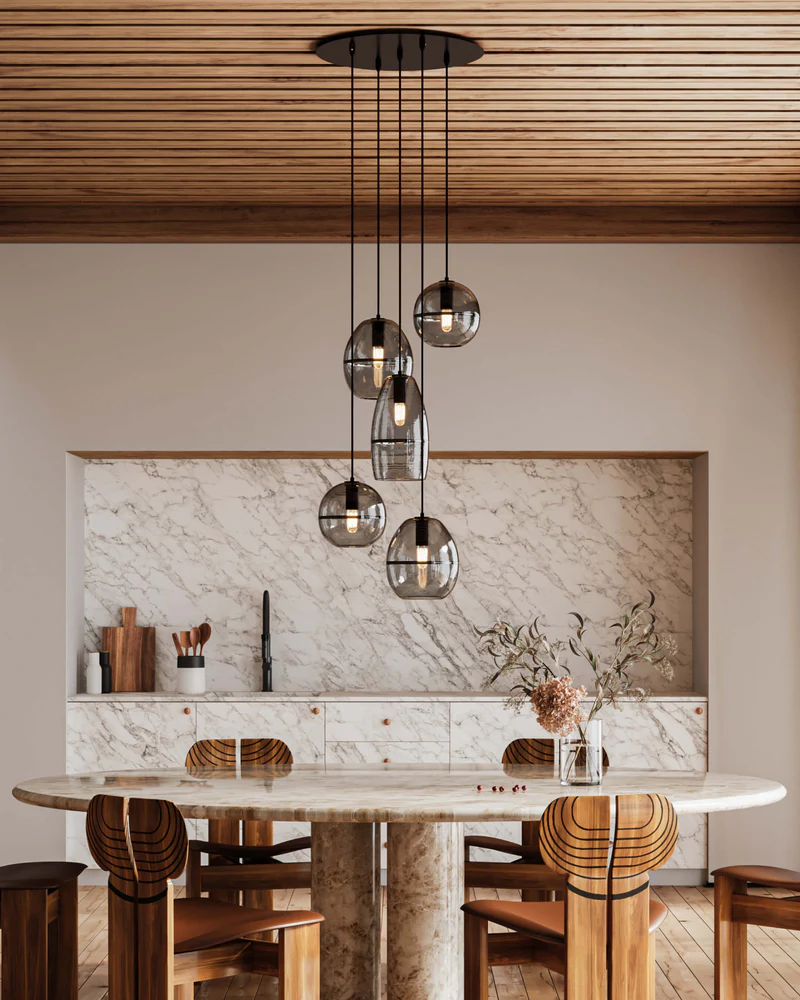
The Halo Collection showcases the “Roman Ring,” an ancient technique of folding glass into itself. A simple, elegant detail that remains one of the most challenging in glassblowing.
AJ: What is your favorite place to find inspiration?
JS: I spend a fair amount of time on a remote island in Ontario Canada during the warm weather months. It is part of the Canadian Shield which is made up of huge masses of Precambrian rock. The cabin is 20 miles by water and within a couple days my whole awareness is reset and I feel a new sense of possibility. Everything feels bigger — the stars, the sky, the clouds. It is truly magical.
AJ: How do you incorporate sustainability into your designs?
JS: We start our process with the hand. Everything is made in our studio, so we are always thinking and evaluating our makers ability to sustain the production of the design. From there we evaluate longevity. It is a prerequisite for everything we make. It must be repairable and we really design it to last forever. Sustainability means forever, so we want to make an object that first and foremost will always be desirable and then have the quality to last forever.
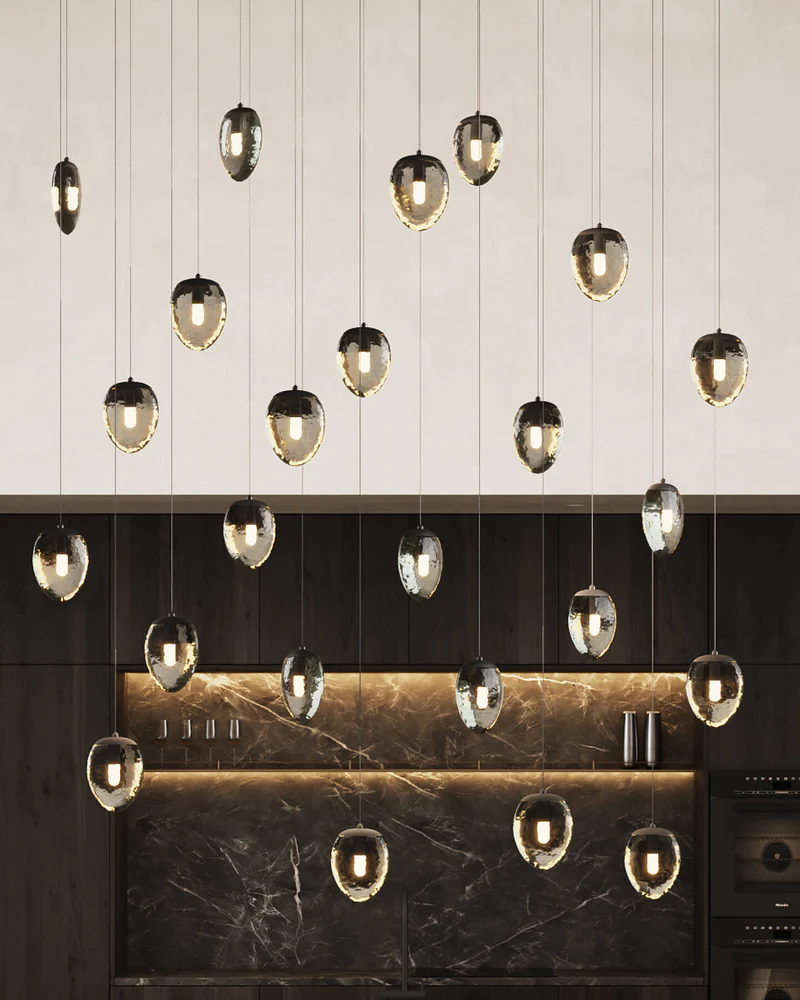
The Foliole Collection reimagines a leaf form, with a flattened shape that textures the glass and softly diffuses the light.
AJ: How do you balance functionality and aesthetics in your designs?
JS: Harmony is the ideal state. We always start with beauty because beauty is a type of function. Without beautiful things, we have less joy and that is our first criterion for success. We come from a region that is rooted in usefulness, so I think we would always feel the functionality being a priority as well. For each design, we think about how the engineering can empower the beauty. If the engineering becomes invisible in a sense, meaning you only notice the beauty first, then we have entered the harmonious space.
Like what you see? Get it first with a subscription to aspire design and home magazine.