 Robert L. Newman III is a multifaceted talent – an accomplished Wall Street professional turned artist and influential community figure. After obtaining a degree from Morehouse College in 2014, Newman spent an initial eight-year stint as a financial/business analyst on Wall Street. Newman transitioned to embrace his passion for the arts full-time in the summer of 2022. Now, as an artist and entrepreneur based in Harlem, New York, his expressionist portraits have gained recognition both nationally and internationally, exploring narratives concerning the Black community. While working in the corporate world, Newman served as the inaugural Equity, Inclusion & Diversity Program Manager at Neuberger Berman. In his role, he helped to raise the firm’s overall diversity and inclusion score, raise $1m+ for the NAACP’s Legal Defense Fund, and draft the firm’s current vendor diversity program. His artistic endeavors and community service are complemented by his role in advancing the Morehouse NYC Alumni Association’s objectives and fostering connections among alumni and the local community. Start your week with Newman’s work in today’s Maker Monday.
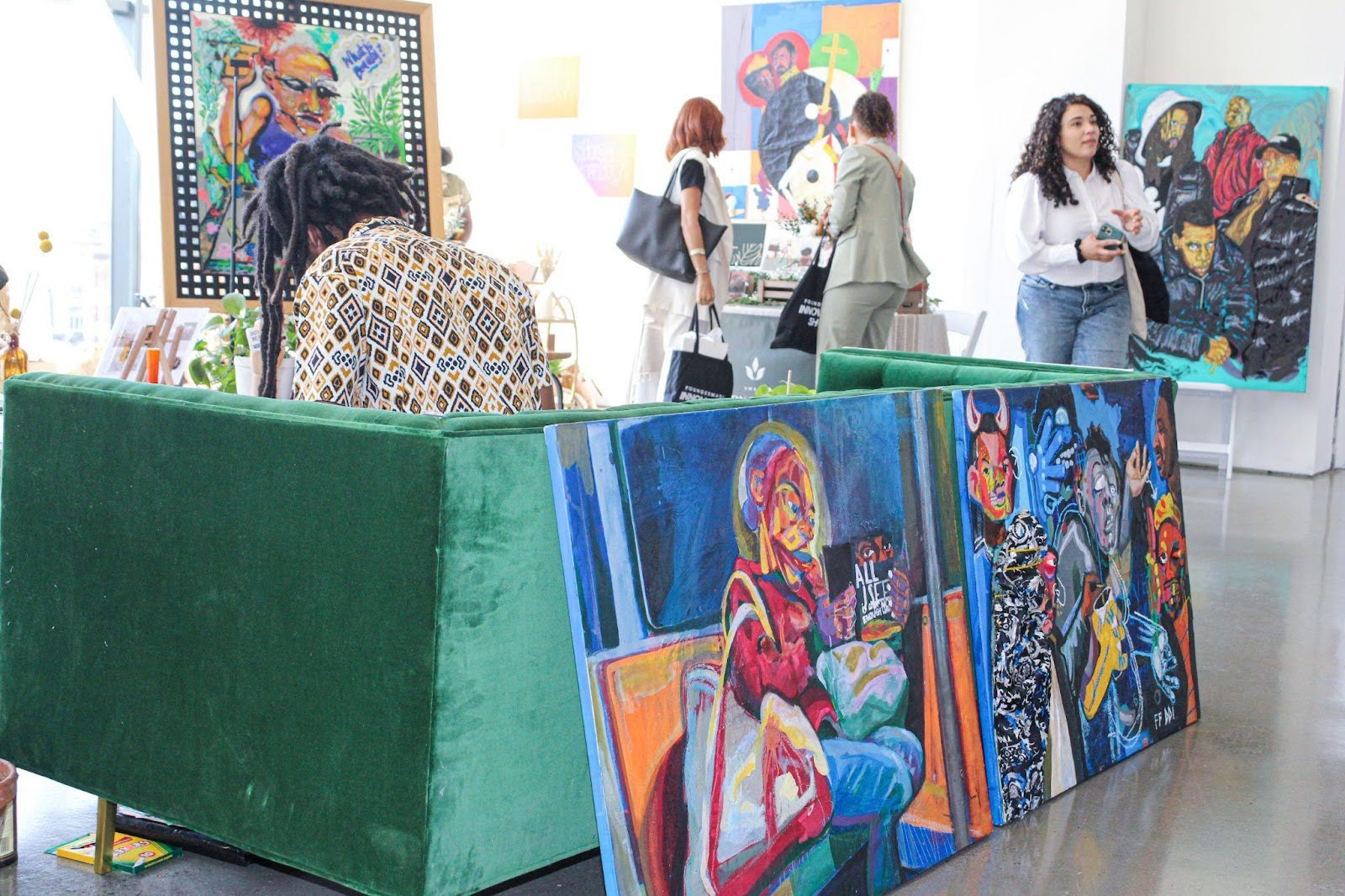
Robert L. Newman III, a self-taught artist with roots in the Jim Crow South, uses his multidisciplinary talents to reflect on Black American history, aiming to foster healing and growth through his evocative works.
Andrew Joseph: What inspired you to become a designer?
Robert Newman: My grandmother, Linda, is the woman that set me on my path. She owned a doll shop in the historic Greenwood district of Tulsa Oklahoma, better known as Black Wall St., from which she sold handmade (Black) porcelain dolls. What was even more extraordinary was that she was completely self-taught. I still haven’t been able to fully articulate the amount of inspiration she has given me over the years. As a youngster she saw that I was active, curious, and if not monitored a bit mischievous. Her solution was simple: put the energy to use. She sat me down in her shop and showed me how to weave pot holders, I sat there still entranced by the process. After a few days of practice, and probably the good advertising of me sitting in the shop window, I had my first customer. I was completely caught off guard, I didn’t know what to do, how much the pot holders should be, or if I should even be talking to a stranger!! When I asked Grandma for advice she said “You can do whatever you want…” To this day, the craziest thing I’ve ever done is believe her.
AJ: What’s the best piece of advice you’ve received as a designer?
RN: Be more relentless as an editor, but remain extremely free (unhinged) as an artist. I’m not sure that I was ever taught a “creative process” in the same way that I was taught the scientific process or order of operations for math. So when I heard this it reminded me that at different stages of each project, I have to engage with my work with a specific mindset.
AJ: How do you stay creative and inspired?
RN: I feed my curiosity. I believe that wonder is at the heart of creativity. I’m constantly reformatting how I ask questions, or exploring new places, or purposefully getting lost when I travel (which can be stressful for folks when I travel in groups). I’m always asking myself “When was the last time I did something for the first time” which forces me out of my comfort zone a lot. And finally, at my core, I’m really just a jealous collector of ideas and information. From my point of view, everything that everyone else in the world is doing is the coolest thing. I love learning about other artists’ processes, references, or simply their lives.
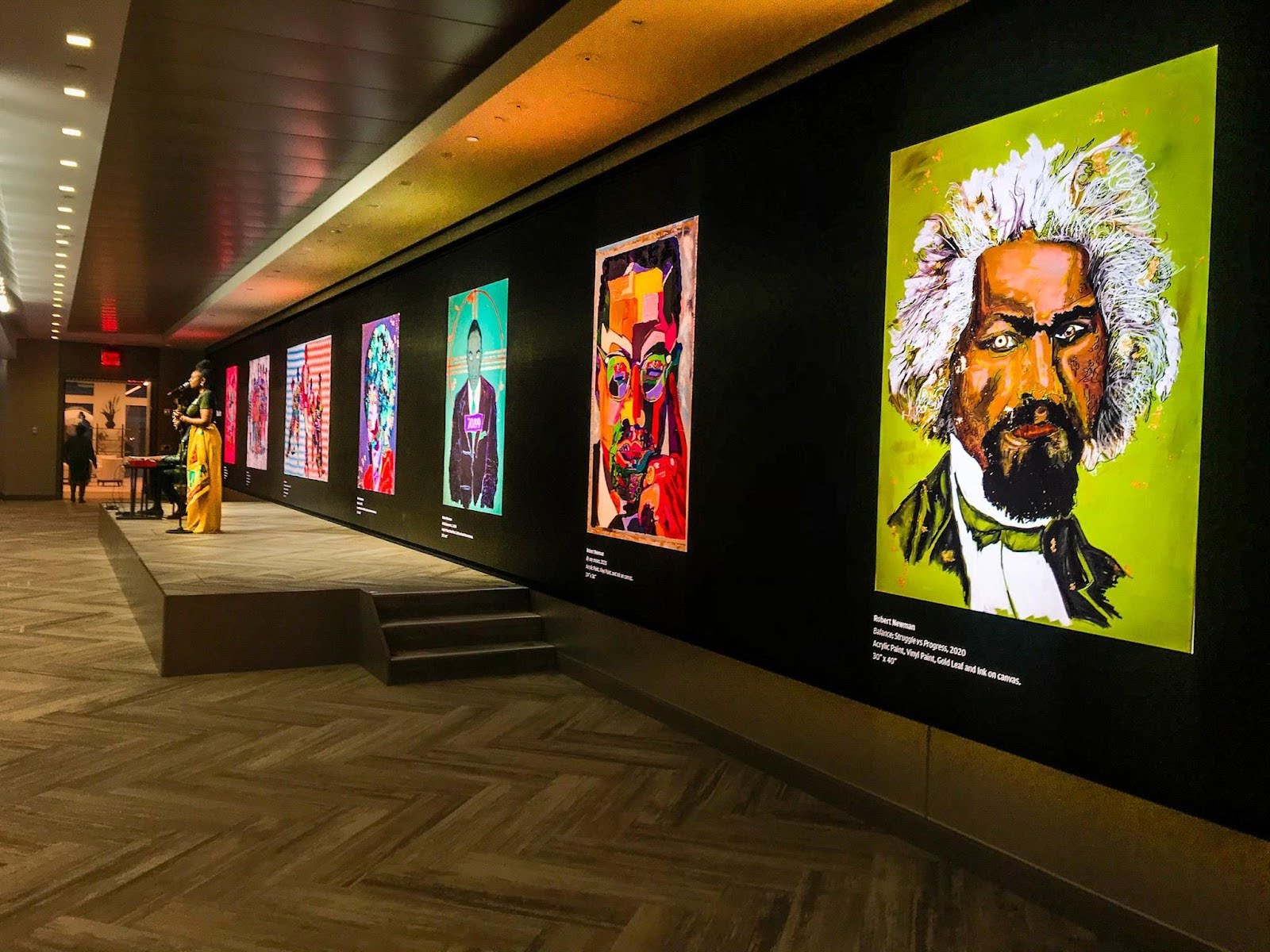
From Tulsa’s Black Wall Street to Harlem’s vibrant art scene, Newman’s journey intertwines personal history with powerful expressionist portraits, celebrating Black American resilience.
AJ: What was the last book you read and how did it inspire you?
RN: The Art of Loving by Eric Fromm. In the beginning of the book, the author evokes the quote: “He who knows nothing, loves nothing. He who can do nothing understands nothing. He who understands nothing is worthless. But he who sees… the more knowledge is inherent in a thing, the greater the love… Anyone who imagines that all fruits ripen at the same time as the strawberries knows nothing about grapes.” – Paracelsus
The author then goes on to define “respect” (as a foundational principle of loving) as being able “to see” or “to look at.”
I was so moved by this because it reminded me that although we tend to think about respect in modern terms as something that can be given, taken, deserved, or earned … it simply means to see. As a designer, I’m constantly fighting against my own biases and challenging myself to see as honestly as I can. I even remind myself when I am painting sometimes that it’s “arrogant to think I don’t need a reference image” because there are always more details that are eager to reveal themselves to a patient and curious eye.
AJ: Can you tell us about a specific moment in your career that made you feel accomplished?
RN: Transitioning into art / creative industries full-time: One of the biggest risks I’ve taken to date has been leaving my job on Wall Street, to pursue my art career full-time. I moved to New York City in the summer of 2014 to start my full-time professional services career at Morgan Stanley as a financial analyst. Although I’ve been an artist and creative for most of my life, I studied business administration in college, so getting a job at one of the top investment banks in the world was a dream come true. After spending the first 4.5 years progressing through various positions at the company, I transitioned into a new finance role at Neuberger Berman. Neuberger Berman seemed to be godsent because it’s an employee-owned, boutique asset management firm, that was started by Roy Neuberger – one of the cornerstones of the contemporary American art scene. I thought that surely being in a place that used my business acumen AND had a deep history of supporting the arts would be the perfect venue for a polymath like myself. But after spending another 4 years working there, I realized that the only way to make my art shine fully was to commit to the task. So in August of 2022, I took my leap of faith.
AJ: What is your favorite place to find inspiration?
RN: Harlem, NYC (Striver’s Row) – From the history to the architecture, when I’m looking for inspiration, all I have to do is take a stroll through Harlem. In the early 20th century, during the Harlem Renaissance, Striver’s Row became the cultural mecca for Black intellectuals and artists of the time. Today the murals, the historic plaques/marques, and the vibrancy of the current residents transport me back to a golden age of creativity.
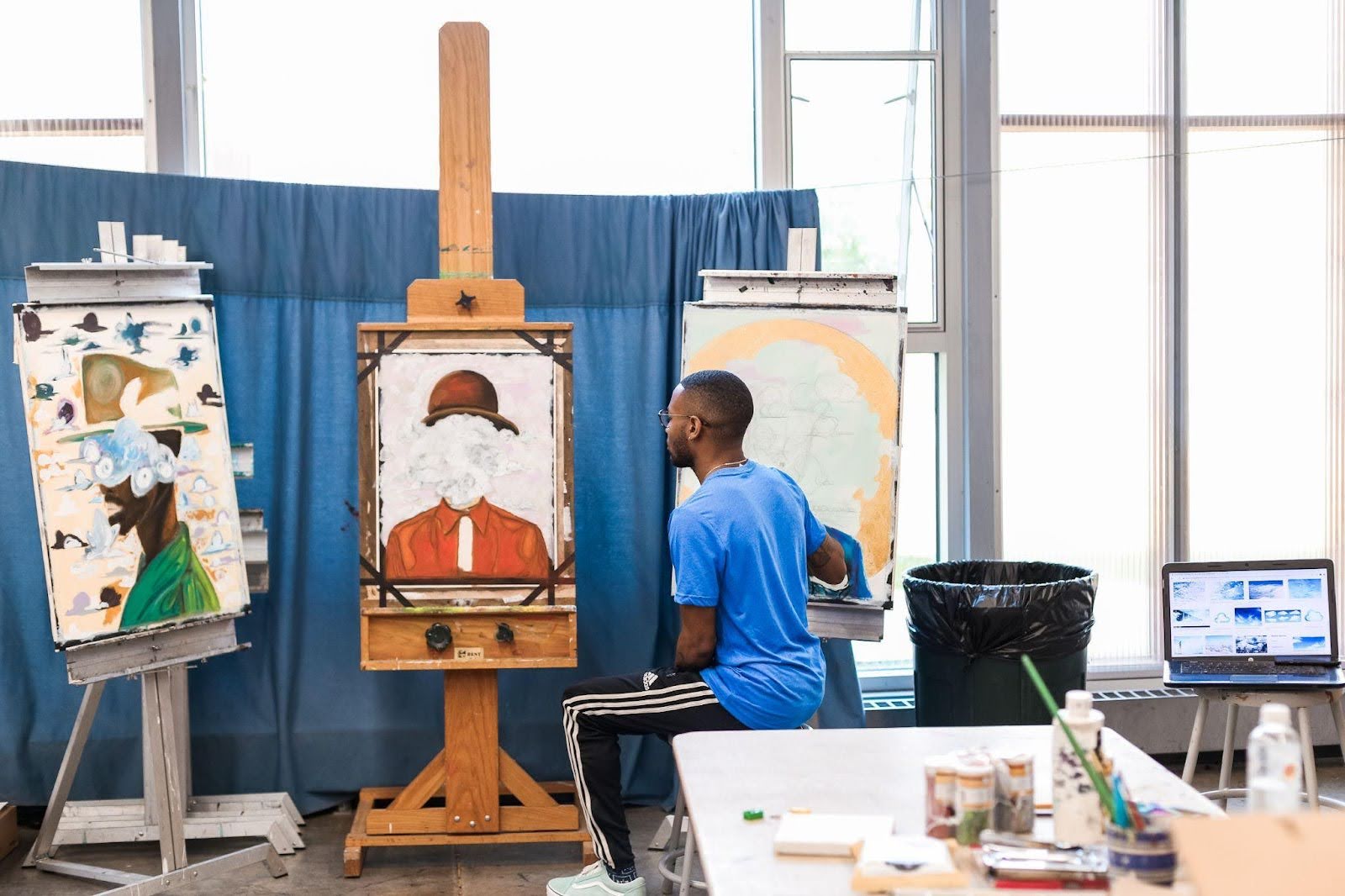
Inspired by his grandmother’s activism and the historic Greenwood District, Newman’s art delves into the narratives of Black culture and the post-Civil War reconstruction era.
AJ: How do you stay organized while working on multiple projects?
RN: Copious notes – With a background in financial planning and accounting I’ve come to believe there is no such thing as an insignificant detail. Early in my career, I had a mentor who suggested that I simply work on taking more notes than anyone else in the room. This was great for me, because it was easy to remember, universally applicable, and helped to keep me awake in all of my meetings!!! Over the years I’ve come to realize how important this is. You never know when you will have inspiration,, or motivation for that matter, to push a project forward, and once that moment strikes, you will thank the past you that thought capturing the wall dimensions, or window/lighting directions could be nice to have.
- Batching Task – Find the similarities and differences in ALL of the work that you do. Learn to dedicate intentional time to do things like reply to emails, update proposals, make follow-up calls, etc. This will help you to avoid fatigue via switch cost effect. This is especially helpful for artists and creatives. 9/10 when you batch tasks, you quickly begin to find small efficiencies that ultimately help to get things done faster as well.
- Using & Trusting your Calendar – My friends tease me at times for sending calendar invitations for lunch dates, or check-in calls, but putting things on my calendar helps me to get a better idea of how much time I’m spending on each task. It reinforces the habit
- Developing good habits and systems (i.e. rituals for success)
- Calendar/scheduling tools for clients
- Automating tasks where possible via tools like AI, client surveys, app integrations, etc.
- Checking in with clients regularly
- Reaching out to new clients
- Finding more and more inspiration
AJ: Style (or design) icon and why?
RN: Pharrell Williams – as a creative, I’ve always had a bias towards the multihyphenates and polymaths. As a young man, I remember getting the “In My Mind” album during my freshman year of high school and loving everything about it. This was when people still bought CDs, and one of my favorite things that immediately set this project apart was the album art. Instead of a normal paper cover with credits and track listing, when you opened the case you found a Billionaire Boys Club-inspired poster. From then until now, I’ve enjoyed his artistic journey, the evolution of style, and a constant drive toward sustainable innovation.
AJ: What’s a new hobby/skill that you have learned recently?
RN: Learning how to play the acoustic guitar and gardening on my rooftop. However, I’m much better at gardening than I am at the guitar.
Like what you see? Get it first with a subscription to aspire design and home magazine.