
 Steve Nichols is the head of product and design at Tupelo Goods. With a background and formal education in industrial design from Purdue University, Steve’s design career has included Delta Facet Company, AdamsGolf, Taylormade, Adidas, YETI Coolers, his own consulting practice, and, most recently, Tupelo Goods in Austin, Texas. He designs every product at Tupelo from beginning to end. Steve’s goal at Tupelo is to build a design-centric product company and culture that prioritizes originality, quality, and durability. See the beautiful outdoor furniture from Tupelo Goods in today’s Maker Monday.
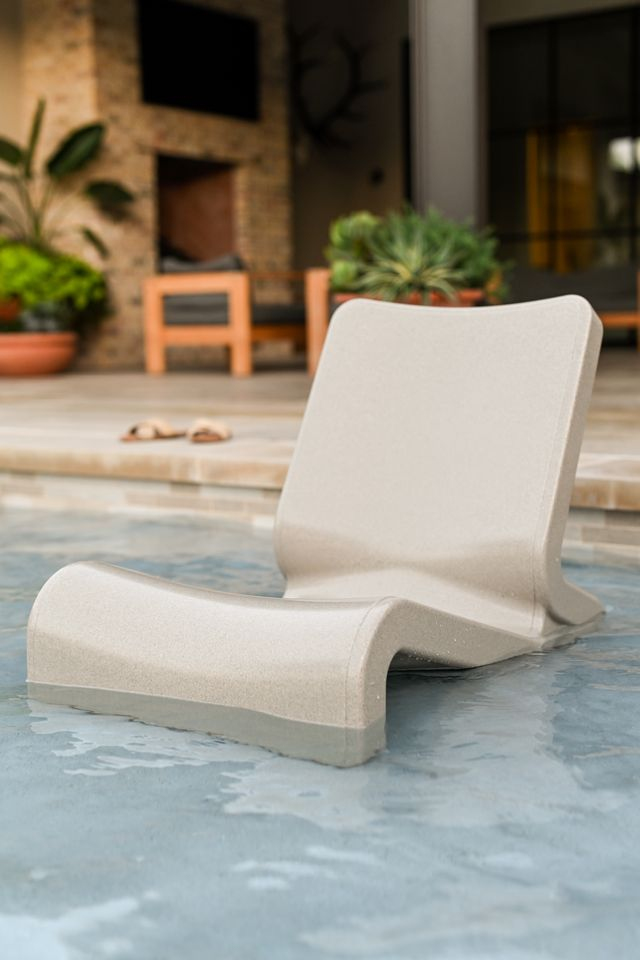
The Line Outdoor In-Pool Lounge Chair brings a sculptural, architectural feel to the water without trying too hard.
Andrew Joseph: What’s the best piece of advice you’ve received as a designer?
Steve Nichols: I had a manager early in my career who gave me great advice that I think about to this day. He said, “Don’t let your design process turn into an art project.” What he meant by that was to remember the whole point of what you’re doing. Especially in a larger corporate organization, it’s easy to fall into the trap of making design decisions to appease the requests of your cross-functional business partners and accidentally marginalize the needs of the end consumer. It’s also easy to get caught up in creating fancy sketches, beautiful renders, and slick presentations. That content can be helpful to move an idea forward, but the end consumer will never see those things. The whole point is to remain focused on what you’re creating, why you’re creating it, and who is to benefit from it.
AJ: How do you balance functionality and aesthetics in your designs?
SN: Sacrificing either is a non-negotiable. The first thing I do is to understand the specific aspirations of a product’s function for the design I’m going to bring to life. The intention of the aesthetic is to support the functional goal. The mission is to weave them together so the product’s aesthetic is a reflection of its functionality. Furniture is very utilitarian and functional by nature, but the majority of its life will not be performing that function. It will be sitting by its lonesome without human interaction in a room or environment. So when it’s not functioning as furniture, its job becomes less utilitarian. It then needs to help support the room or environment aesthetically. It becomes more of a sculpture or a design element in the space. I try to pay close attention to both aspirations when making design decisions.
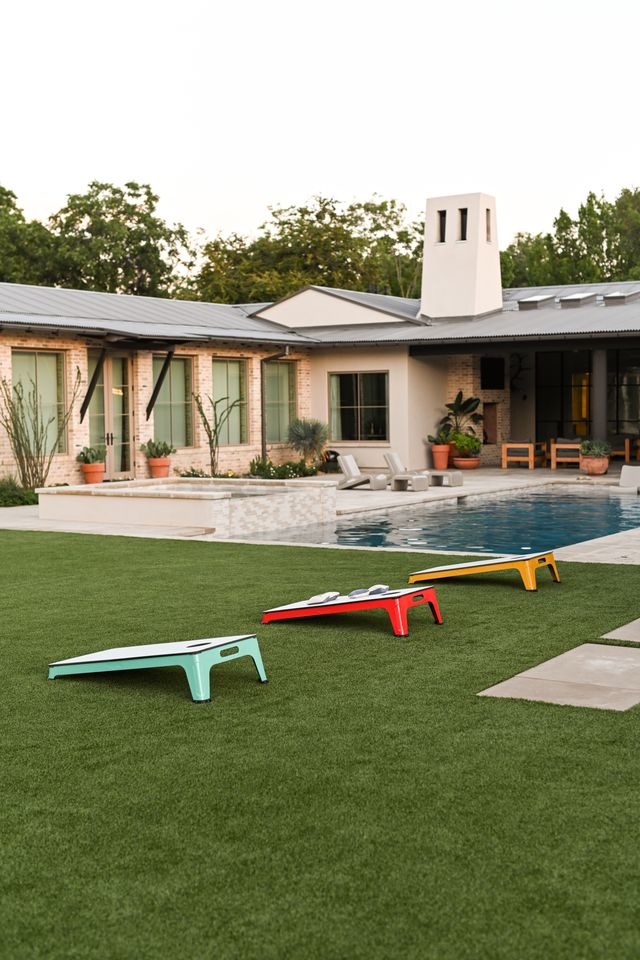
These All-Weather Cornhole Boards add a playful layer to the lawn without disrupting the overall design of the exterior space.
AJ: What is the most important skill for a successful designer?
SN: I think there are two critically important skills to be a successful industrial designer. The first is empathy. I consider it a skill rather than a trait because you can get better at it. In this context, empathy is the ability to truly understand someone else’s perspective. Understanding the needs and problems of others allows you to develop more thoughtful solutions. The other is imagination. The ability to imagine a future-state allows you to envision a scenario where something could exist that currently doesn’t. A good imagination can help bridge the gap between the idea and the tangible. It’s like prototyping in your mind, allowing for rapid iteration early in the design process.
AJ: What is your favorite design era and why?
SN: I especially appreciate Art Deco and midcentury modern. For me, it’s less about the specific aesthetic and more about what was happening in the culture that drove these design movements. Both Art Deco and MCM boomed after each World War. They are reflections of cultural rebirth and booming industry following periods of conflict and turmoil. To me, these eras represent human potential in art, creativity, and industriousness. The design styles that emerged seemed so unique and refreshing at those times. They aren’t derivatives of past design styles; they are symbols of what it means to move forward and design the future-state. I love that as a mindset and a constant aim.
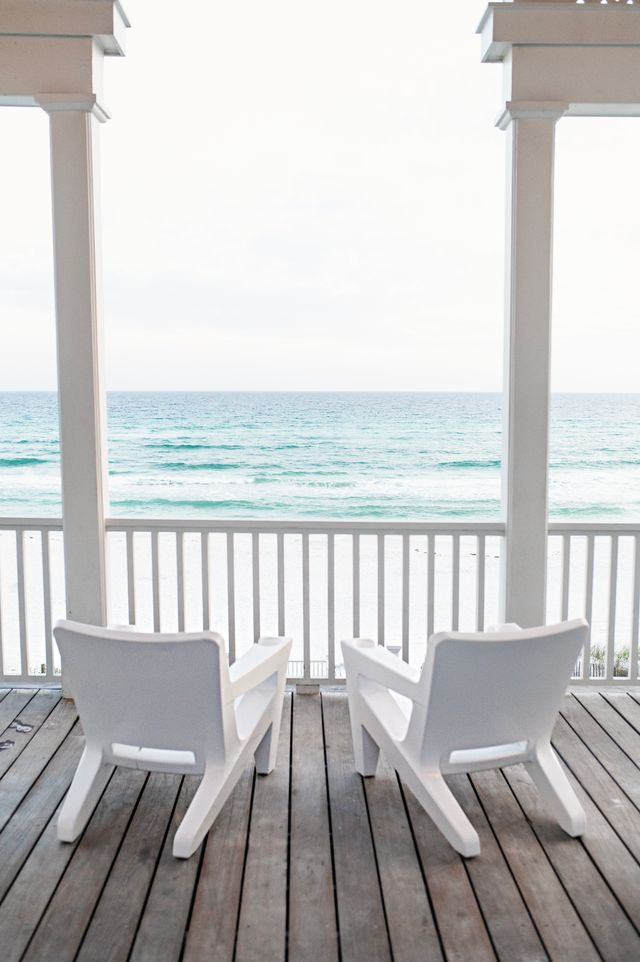
The Bask Chair Ledge offers a modern take on the classic Adirondack, designed to frame the view rather than compete with it.
AJ: If you weren’t a designer, what would you be and why?
SN: I have always been deeply interested in behavioral psychology. Maybe I would pursue a career in that field. Why we do the things we do, why we behave the way we do, and our fundamental motivations as humans living in certain cultures are so incredibly fascinating to me. It also feels very adjacent and relevant to my design career. I design products for people. The more I know about what design decisions will resonate with my target audience, the better equipped I am to make the right determinations.
AJ: What was the last book you read and how did it inspire you?
SN: The last book I read was The Creative Act: A Way of Being by Rick Rubin. It’s a beautifully written book with an incredibly profound message. The general thesis is anchored in the belief that great ideas are all around us. It’s the practice of paying attention that allows you to “tune in” and become more aware of ideas that would otherwise vanish before they’re discovered. It’s been helpful to me when I feel creatively stuck in a rut. It’s practical, philosophical, and refreshing. I would recommend it to anyone who partakes in creative endeavors.
AJ: What is your favorite aspect of your job?
SN: Without question, the best aspect of my job is witnessing people in public experience a product I’ve designed. When I see a complete stranger using a product I designed in ways I hoped and imagined they would, it’s an incredible feeling. I put so much thought into every detail and really try to optimize usability. When I’m able to see someone have a positive experience with one of my designs, all the hard work and contemplation becomes worth the effort.
Like what you see? Get it first with a subscription to aspire design and home magazine.