
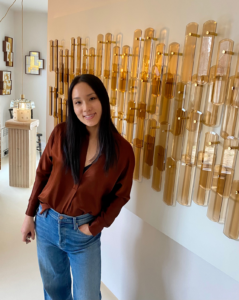
 Born and raised amidst the apple orchards of Silicon Valley, Tina Scepanovic is a Chinese American artist with a knack for combining old and new. With a florist mother and engineer father, her childhood was a blend of artistic sensibility and technical prowess. Inspired by a traditional furniture painting course at the renowned Isabel O’Neil Studio in New York, Tina delved into the world of conservation and historical decorative finishes, discovering a passion for techniques like traditional water gilding, Asian lacquer, and faux marble. She has since been on a mission to bring these time-honored methods into the contemporary landscape, seamlessly blending past with present in her sculptures and installations. Tina’s work frequently integrates wood, metal, glass, and vintage materials, selecting them for sustainability and longevity, and transforming them using historical finishes and mindful ingenuity. Her intricate process involves layering oils, glazes, and lacquer over wood, insisting on manual execution for almost every step to achieve the fineness the art form demands. Get to know Tina and her work in today’s Maker Monday!
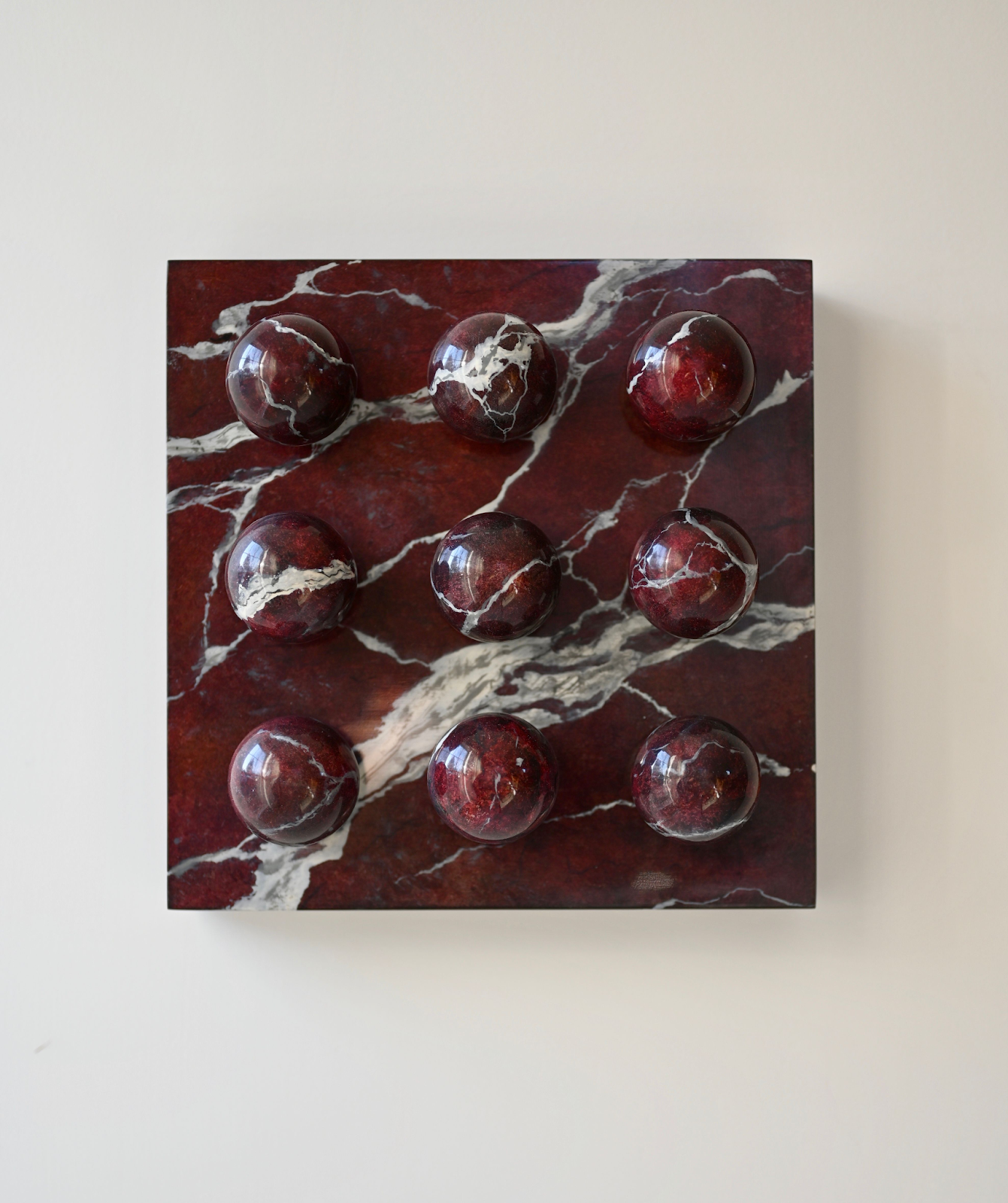
Gobstoppers No. 32 – Inspired by life in lockdown, Gobstoppers represent playful attempts at tracking time in the absence of an external reference.
Andrew Joseph: What inspired you to become an artist?
Tina Scepanovic: Art has always been an intrinsic part of my life. As a kid, I would spend hours tinkering in the garage with odds and ends, making shoes, extracting pigment from leaves, and coloring poster boards edge to edge with a range of media. In college, after studying all day, I’d stay up all night arranging and producing music on the computer. Even as an adult, despite feeling drained by my corporate job, I would find the time to decorate cakes and refinish furniture. For most of my life, I did what I was supposed to do – get good grades, go to a good school, get a “real” job. I think I became an artist the moment I decided to stop running from myself.
AJ: Describe a project where you had to work with a specific theme.
TS: We were a few months into a commission for a Gobstopper wall piece when the collector lost her father. Initially, we were unsure of the finish we wanted for the sculpture. However, his passing profoundly influenced the direction of the piece. Cars had been a central part of their relationship, and she fondly remembered bonding with her dad over them. They actually owned different variants of the same car. Hers was gray, and his was a larger and nicer version in a deep midnight blue enamel. In honor of this, we went with a glossy midnight blue for the wall sculpture. I love that through this artistic choice, we were able to pay homage to her father’s memory!
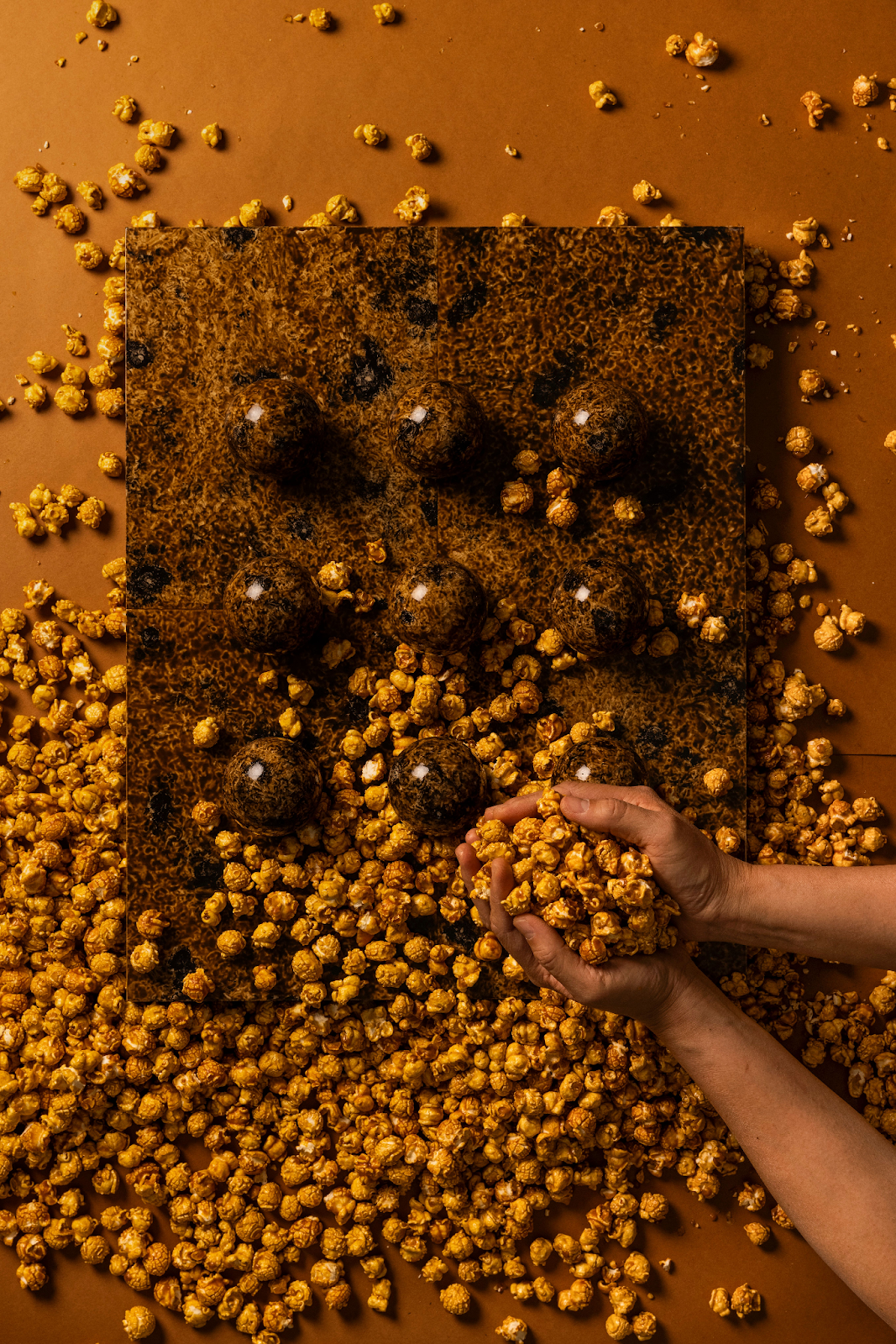
Gobstoppers No. 18 – Often interpreted as abstractions of calendars, the Gobstoppers series is meant to be comical as each piece is not quite right. These immortalized mistakes convey a sense of optimism and remind us not to take ourselves too seriously.
AJ: What is your favorite design trend from the past?
TS: Decorative finishes, obviously! Although I hesitate to call it a trend because it is an art form that transcends centuries. While many recall the resurgence of faux finishes in the 1990s, this technique has really been around since ancient times. On the surface, it may seem a bit silly. People ask – well, if you want the look of marble, why don’t you just use marble? And to that, I say – because we are human, and we can’t help but desire to bend nature to our will. Decorative finishes allow you to incorporate that element of fantasy into an environment. On a deeper level, I believe it captures the optimism of the human spirit. Don’t have access to certain material? Don’t want to kill a tortoise? Can’t use a particular material due to the laws of physics? No problem – just use pigment, sheer will, and determination.
AJ: Can you tell us about a project where you incorporated sustainable materials into your work?
TS: Coming from the world of restoration, I am always asking myself how we can make use of material we already have rather than producing more. Last year, I created an entire body of work entitled “You Always! You Never…,” which incorporated vintage glass components to explore the nature of domestic relationships. One of the major pieces from that series was placed with a collector, leading me to believe that there is true potential for sustainable materials in collectible art and design. Instead of a “trash to treasure” approach, mine is more like “treasure to treasure” because I choose to work with materials that are basically new. They’ve just been sitting in someone’s basement for half a century!
This year at ICFF, I debuted my Elica lamp, which I created using 1970s vintage amber glass from India. Its sister piece is a gilded vintage glass wall installation – “Resilience” – currently on view at Demuro Das.
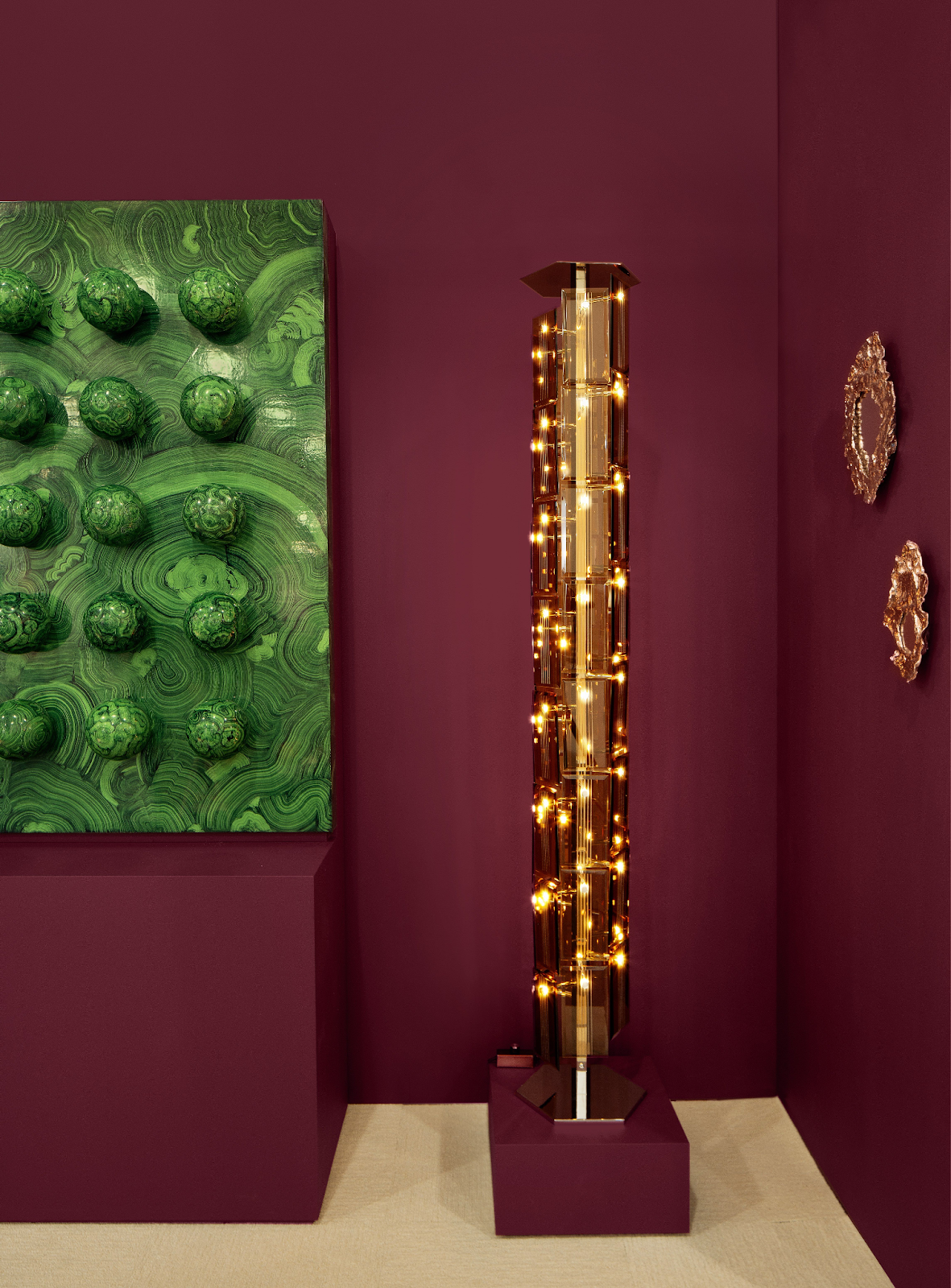
Part of Scepanovic’s 2024 ICFF Installation.
AJ: Best advice you’d give your teenage self?
TS: It is no one’s job but your own to believe in yourself. You simply can’t outsource that part, especially in the art world. Your unique voice may be popular one moment and overlooked the next. While it is wonderful to have mentors, supporters, and friends who cheer you on regardless of market trends, the most critical source of belief must come from within.
Yes, there are instances of aspiring artists meeting people who change the course of their careers. But we can’t sit around waiting for that to happen. Tastes and agendas change constantly. Believe in yourself enough to keep doing what you’re doing, even when it seems like no one is listening.
Like what you see? Get it first with a subscription to aspire design and home magazine.