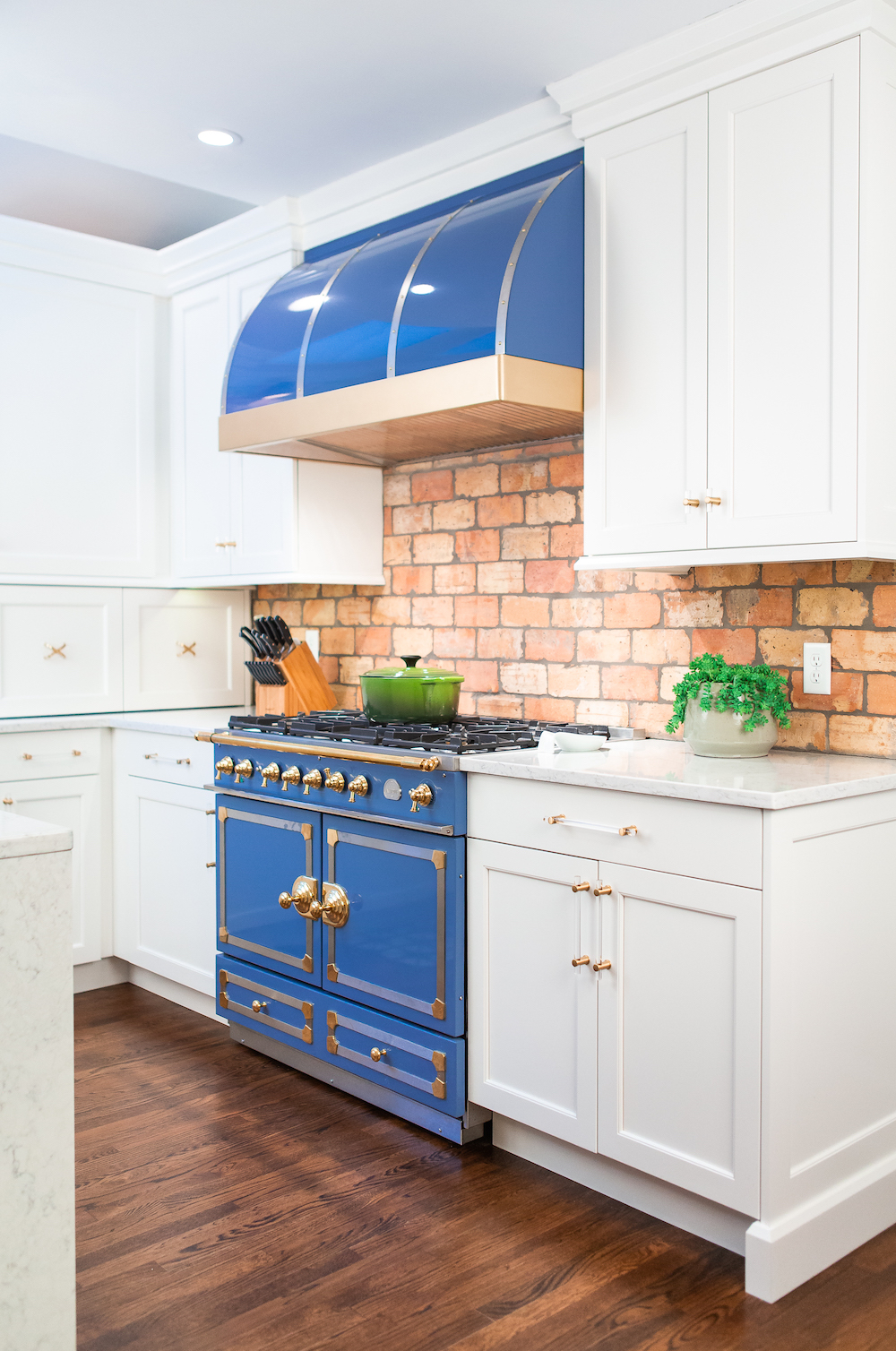
A range hood embellished with a glittering constellation of Swarovski crystals? Or a modern stainless steel hood that’s an instant focal point? If you can imagine it, chances are RangeCraft can create it. Celebrating over 50 years of designing custom range hoods for luxury kitchens, RangeCraft is known for their artistic approach to ventilation. From decorative metal hoods in copper, brass and steel, to a cosmic array of colors and finishes, each range hood is customized to their clients’ detailed specifications. David Podwyszynski, owner and production manager, shares some of the New Jersey-based company’s trending styles, custom options and innovative features.
 Gwen Donovan: What new products is RangeCraft launching this year?
David Podwyszynski: At January’s KBIS (Kitchen & Bath Industry Show), we introduced a new textured-style powder coating with brass-toned hues. People came up to it, touched it and said, “What is that, leather?” We’ll be introducing a few of these different powder-coated options in 2023.
GD: Do you have any recent news to share about RangeCraft?
DP: Yes! We were hand-selected by the international Rolls-Royce Owners Club to be in their yearbook celebrating the company’s 20 years of manufacturing at the Goodwood factory in England. We are going to the factory in October when they introduce their electric car model. To be selected by Rolls-Royce and have our name in their book, which highlights the best of the best in all different business categories globally, is amazing.
GD: Congratulations! On a different topic, what are some trends you’re seeing in hoods?
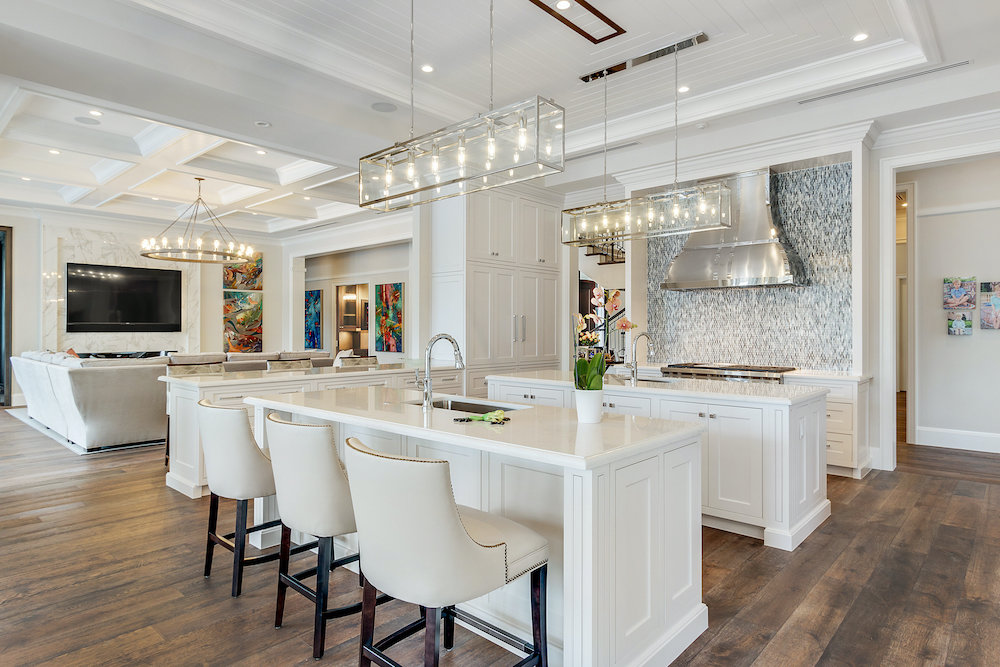
DP: In customized hidden storage, we’re seeing some fun ideas like a ten-foot wide hood with hidden drop-down storage on the left and right sides. The left side can store oils and spices, and the right holds cooking utensils. We are also seeing hoods made with more than two metals; usually, they are fabricated from one base metal and one accent metal. More and more, we’re seeing three different metals. We’re really impressed by the look of it and it’s a trend that’s taking hold all across the country.
GD: What are your thoughts about Swarovski crystal or other hood embellishments?
DP: Swarovski crystals are not for everyone, it’s a scenario for the right person… not in terms of cost, but in terms of your style. Vertical bands or straps give hoods more depth, while the diamond-shaped rivets we make are nice dimensional accents.

GD: Describe the most over-the-top hood range you fabricated:
DP: One range hood comes directly to mind. We worked with a designer from Brooklyn whose work always is intriguing, it’s complex yet delicate. Even one of his industrial hoods looks as if it could fit in any style kitchen. The hood I’m thinking of has the look of flower petals curled out at the top, or crown, of the hood. It’s made of brushed stainless steel and has a stainless steel mirror edge to it. The curved metal frame of polished stainless steel is edged in brushed stainless steel, and standing seams are finished in the mirrored edge stainless. At the bottom of the frame, a special ribbed-style glass is illuminated when the hood light is on. It’s a one-of-a-kind piece of art that’s elegantly done. The designer also asked us to create table legs to mimic the look of the hood using the same flower petal motif. At RangeCraft we offer the flexibility and freedom to create unique projects like these.
GD: Are there any home safety issues to consider with a new range hood?
DP: There is a nationwide code being enforced concerning a ‘make up air’ system to improve indoor air quality. Anything with more than 400CFM (cubic feet of air per minute) needs extra ventilation by bringing fresh air into the home. We are helping architects and builders to be aware of this code; it was introduced about 10 years ago but has been more strongly enforced in the past three to five years. The system is installed right in our own production facility and can be built into a home’s HVAC system. It’s easier to do in a brand new home since it’s expensive to retrofit this type of system if it’s required. We pride ourselves on functionality and we love to educate.

GD: Tell us what sets RangeCraft apart:
DP: Our approach is different; when we say “custom” we mean it. A lot of people throw that term around, but we truly create customized products. Our clients dictate the exact dimensions and specifications of their hood; that’s the true definition of custom.
GD: What surprises people about RangeCraft?
DP: We have always offered fabricated metal countertops, pot racks and backsplashes, among other things, but we didn’t really promote that part of the business much. During the pandemic, with shipping and supply chain issues, a lot of clients needed these items for their kitchens, so we started to do more of them. What makes us so proud is that all our products are made in the U.S. in Fair Lawn, New Jersey, so we didn’t have any of those pandemic-related delivery issues. And I don’t say no to projects!
This or That? Choose one in each pair that most appeals to you personally.
- Metal hood finish: copper, brass or stainless steel? Don’t get me wrong, brass and copper are beautiful metals, but stainless steel is still-and has always been- one of our top sellers. In the end, stainless steel is timeless. It’s a classic look that will never go out of style.
- Hood accents: shimmering crystals or metal rivets? Speaking for myself, anything that’s polished adds a special touch and gives contrast to the kitchen. I like rivets because they stand out but they’re not too busy.
- Hood layout: wall-mounted above the range or ceiling-mounted over an island range? We’ve done all sorts of different types of hoods in different locations, but what I love about a wall-mounted version is that it’s not in the way and won’t block a view from any of the kitchen windows.
- Aesthetic choice: a hood with curving lines or straight lines? Curved, my favorite is a Baroque style that contours in two different ways: there is a curve or a sweep at the top and then it barrels out at the bottom.
- Range type: gas or electric? Gas because it’s quicker to regulate the temperature than an electric range. I also think the food tastes better!
Read more of this series from aspire design and home editor Gwen Donovan, here.
Like what you see? Get it first with a subscription to aspire design and home magazine.